I came across news about Li-Fi technology. It probably means that the Institute of Electrical and Electronics Engineers IEEE has adopted a light-based wireless communication standard. Surprisingly, Li-Fi has existed for some years, but the attention is not great. Be that as it may, what is the origin of Li-Fi? Can it work alongside Wi-Fi? And which is faster?
What is the origin of Li-Fi? And Is Li-Fi Finally Coming to the Fore?
Wi-Fi is no stranger to everyone; it is radio waves. However, Li-Fi is wireless light; the full name is “Light Fidelity.”
You can also understand that Li-Fi uses visible light sources to surf the Internet. In theory, if you light a lamp, you can enjoy a network speed several times faster than Wi-Fi.
After researching some information, I realized this matter might not be that simple. First, compared with the traditional radio waves used for communication, navigation, radar, and broadcasting, the frequency range of light waves does not require approval, let alone purchase.
Moreover, when the Li-Fi concept was first proposed in 2011, some media said that in the laboratory, its transmission speed could reach an average of 100 Gbps, and the fastest time could reach 224 Gbps.
This is because the higher the frequency of electromagnetic waves, the greater the capacity for information transmission. Like a highway, the frequency of visible light is higher, and the speed limit of the lane is faster.
About the Features and Differences Between Li-Fi And Wi-Fi?

Of course, these are only data under ideal conditions. However, compared with the theoretical peak rate of 9.6Gbps of Wi-Fi 6, Li-Fi is faster.
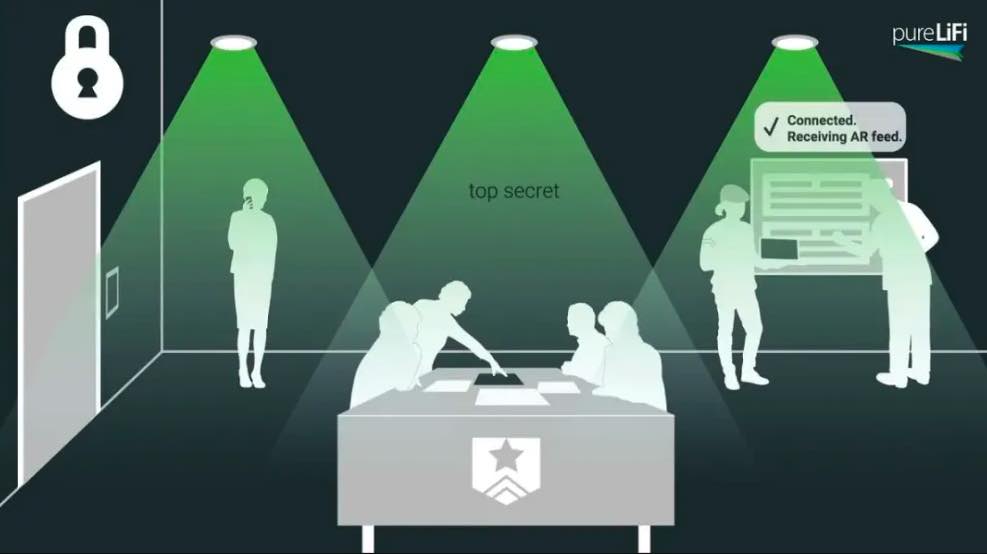
In addition, Li-Fi uses a light source to transmit signals. As we all know, light cannot pass through walls. So you don’t have to worry about signal leakage or someone coming to your network. If you two are not in the same room, he can’t find where your Li-Fi is.
Because of its fast and safe features, Li-Fi has always been popular.
Li-Fi-related manufacturers have also launched some products that can be used on the ground, such as Li-Fi desk lamps and lighting panels.
Carrefour’s smart interconnected LED lighting system is capable of indoor positioning. Using the light, the positioning information of the product can be sent to the consumer’s mobile phone, so you don’t have to worry about finding what you want to buy after searching for a long time. Thing.

It stands to reason that if Li-Fi goes on like this, it should soon be able to replace Wi-Fi. As a result, after so many years, Wi-Fi has not been replaced.
What are the Limitations of Using Li-Fi Internet Technology?
As incredible as Li-Fi technology, it has an Achilles’ heel. That answers the question as to why Li-Fi technology hasn’t replaced Wi-Fi thus far.
- Li-Fi needs light to access the Internet, but this “light” is very particular. Only three types of white light LED, laser, and infrared light can be used for Li-Fi Internet access. Specifically, a small chip is implanted in the light source to turn it into a “Li-Fi hotspot.”
- But there is another problem: when we put our mobile phone in our pocket, leave the room where the Li-Fi signal is located, or block the light source with our hands, the signal may be interrupted. Both visible light and infrared light lack penetrating power…
- In addition, If you want to use Li-Fi at home, you must install a device that can transmit signals in every room. If you’re going to surf the Internet with Li-Fi, you cannot leave the light source.
- Furthermore, it is difficult to achieve two-way transmission with Li-Fi. Of course, we can achieve two-way transmission of data upload and download with Wi-Fi. But Li-Fi transmits signals through the strobe invisible to the naked eye emitted by LED bulbs, which is a one-way transmission method. To solve the limitations of the two-way data transmission of Li-FI, an LED light bulb must be installed on mobile phones and computers, and the strobe rate of the signal sending and receiving end must be very consistent.
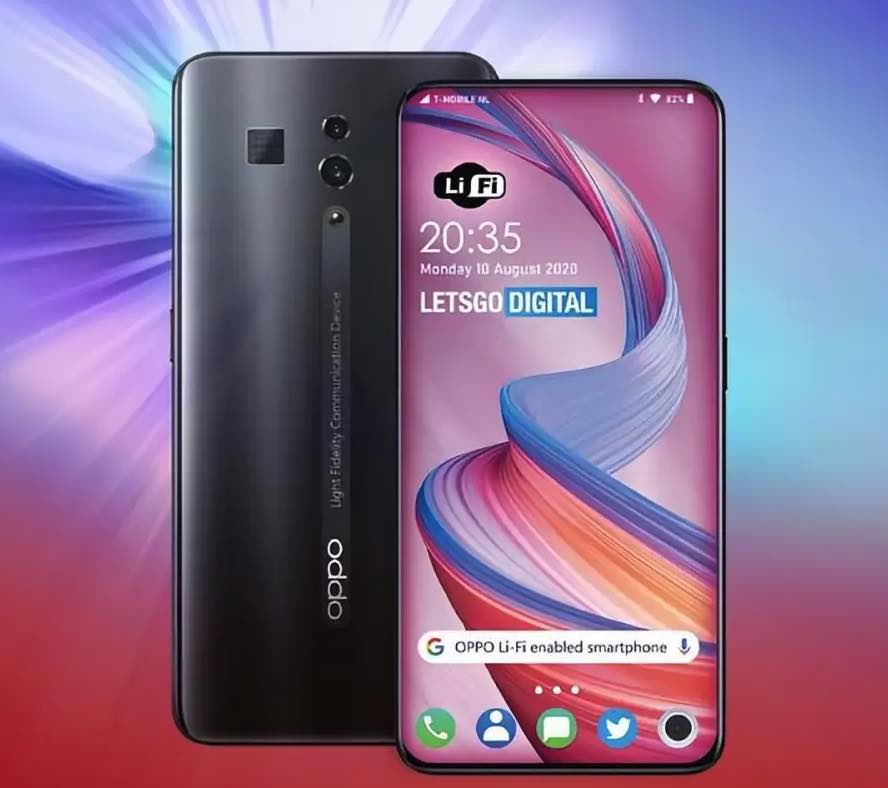
- Although there are some solutions for installing light sources on terminals, there are not even many devices equipped with Li-Fi, let alone the popularity of terminals.
To sum up, Li-Fi’s success lies in the light, and failure lies in the light. This thing is too restrictive to use, and after so many years, the problem has not been solved well.
Intercommunication Between Wi-Fi and Li-Fi
Compared to Wi-Fi, Li-Fi does have many advantages. How about complementing Wi-Fi?
For example, when the mobile phone can receive the signal of the light source, even if it is connected to Li-Fi, it will be fine if the light is turned off or the mobile phone is put in the pocket and then automatically switches to Wi-Fi.
Therefore, this time, adopting the Li-Fi standard by IEEE may also pave the way for the intercommunication between Wi-Fi and Li-Fi.
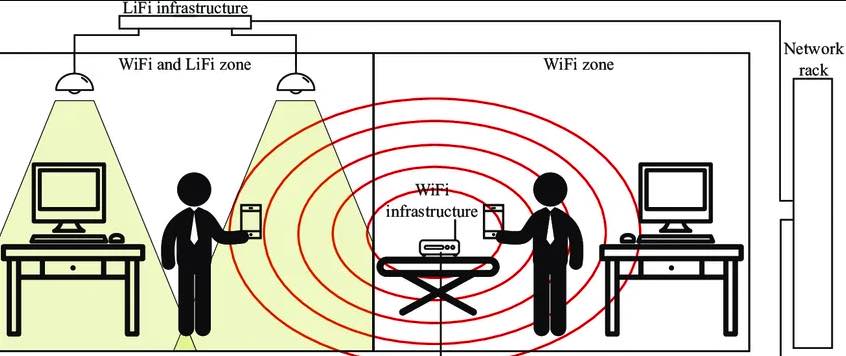
Combining the two will be much easier with unified technical specifications and interfaces. Unfortunately, in the standard released by IEEE this time, the maximum negotiation rate of Li-Fi is only stipulated to 9.6Gbps.
This rate is the same as the current 9.6Gbps of Wi-Fi 6. But in any case, this is also an essential step in the gradual maturity and standardization of Li-Fi technology.
You can also look forward to which scene the combination of Wi-Fi and Li-Fi will land first.
I can’t wait to have Li-Fi technology around fully. So that when I go to a friend’s house in the future, the first question I ask may not be the Wi-Fi password, but you are blocking my Li-Fi signal!!”
Leave a Reply