Today’s article will discuss a popular optical communication concept known as LPO. The optical communication industry has developed rapidly in recent years. So, what is linear-drive pluggable optics?

Under the continuous stimulation of national strategies such as 5G, optical communication technology has made great breakthroughs, and optical infrastructure has also made a qualitative leap.
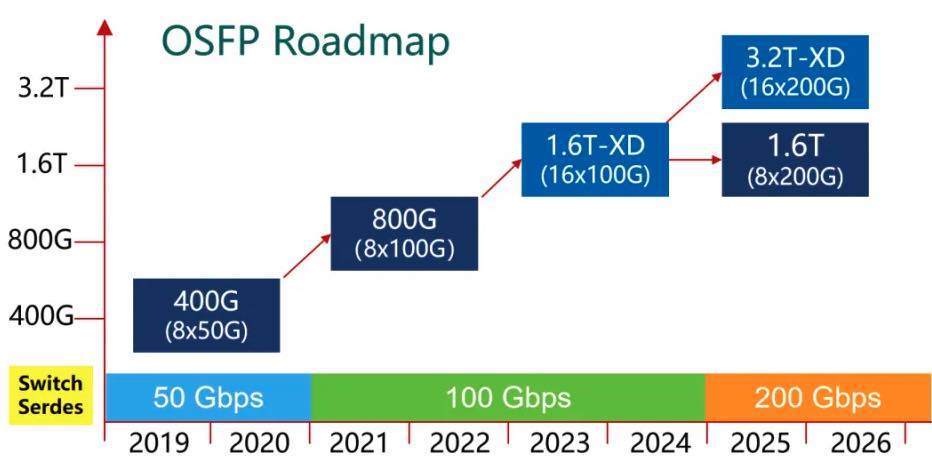
Especially this year, the explosion of the AIGC large model and the rise of intelligent computing and supercomputing have led to a new wave of development in optical communications. Backbone network 400G is about to be fully implemented, and data centers 800G and 1.6T are also eager to try.
Challenges in The Evolution of Optical Communications
The technological iteration of optical communications is not simply a doubling of numbers.
After entering the 400G stage, we have to solve problems related to the increase in speed, power consumption, and cost issues caused by high speed.
Let’s simplify this: Speed increases are like trucking freight. When the cargo carried becomes heavier, the engine needs to be upgraded. The greater the engine displacement, the greater the fuel consumption, and the higher the engine price and fuel expense. Let’s take optical modules as an example.
Optical modules have always been the industry’s focus as a key component of optical networks and the most commonly used component. Their power consumption and price are closely related to the user’s purchasing intention.
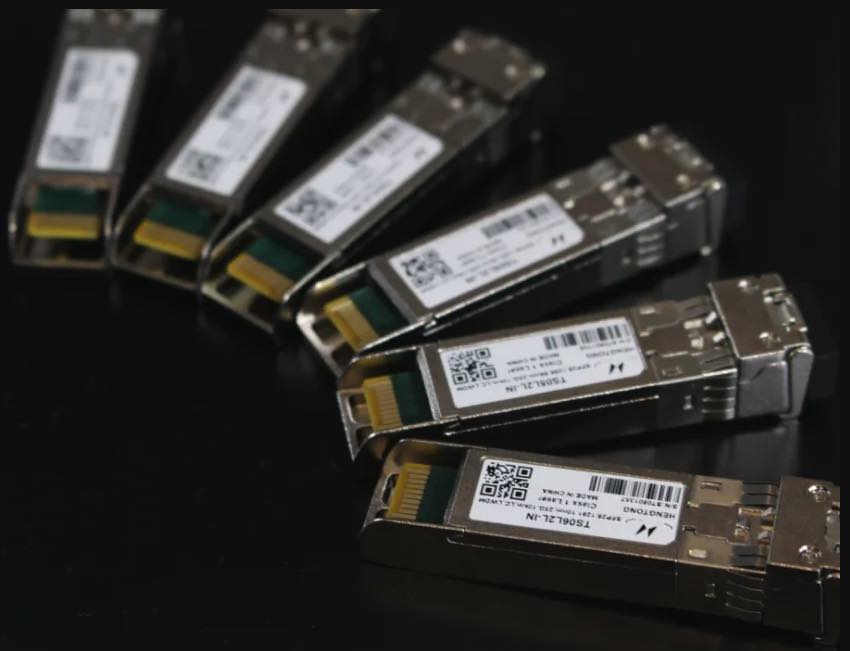
As early as 2007, a 10Gbps (10Gbps) optical module only had a power of about 1W. With the iteration of 40G, 100G, 400G, and 800G, the power consumption of optical modules has soared, approaching 30W. You know, a switch can have more than one optical module. When fully loaded, there are often dozens of optical modules (if there are 48, that is 48×30=1440W).
Generally speaking, the power consumption of optical modules accounts for more than 40% of the power consumption of the entire machine, which means that the total power consumption of the machine may exceed 3000W.
The surge in energy consumption of optical communication equipment has also put huge pressure on the energy consumption and cost of the entire data center, which is extremely detrimental to the dual-carbon goal of communication networks.
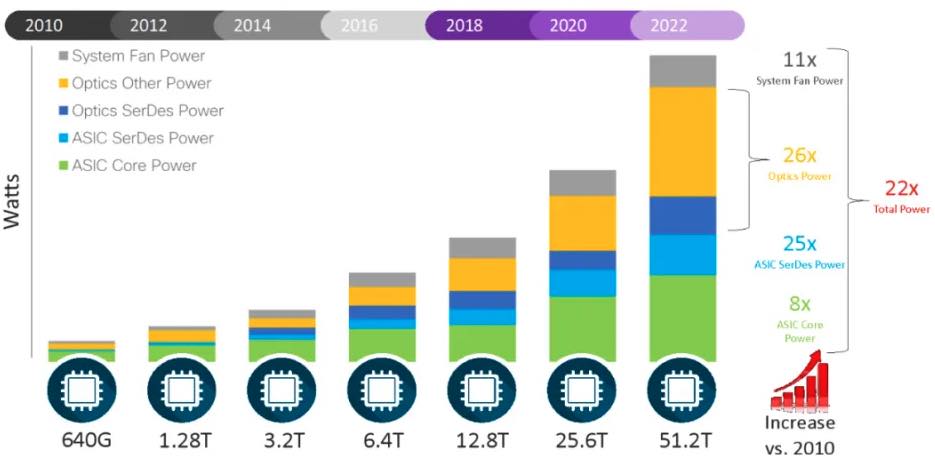
The industry has conducted extensive technological exploration to solve the energy consumption problem caused by increased optical communication speed. One solution is CPO(co-packaged optics), which was very popular last year. I have introduced CPO specifically before (link: What exactly is NPO/CPO? ), so I won’t go into detail here. This year, in addition to CPO, the industry has proposed a new plan, which is LPO.
You May Also Like: Is Fingerprint Unlocking on Mobile Phones Going to be Discontinued?
What is linear-drive pluggable optics?
The full English name for LPO is Linear-drive Pluggable Optics. It is a linear-drive pluggable optical module. As can be seen from the name, it is an optical module packaging technology. The so-called “Pluggable ” means that the optical modules we usually see are all pluggable.
As shown in the figure below, the switch has optical module ports. The optical fiber can be inserted by inserting the corresponding optical module. If it’s broken, it can be replaced.
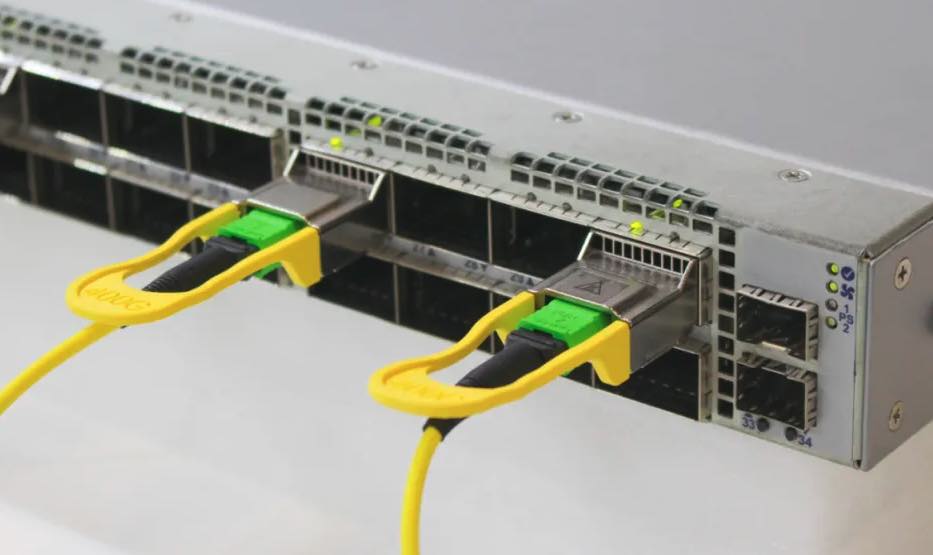
LPO emphasizes “pluggable ” to distinguish it from CPO solutions. In the CPO solution, optical modules are not pluggable. The optical module (optical engine) has been moved closer to the switching chip and is directly “tied ” together.

Then, the key difference between LPO and traditional optical modules is the linear drive.
The so-called “linear drive” means that the LPO adopts linear direct drive technology, and the DSP (digital signal processing)/CDR ( clock data recovery ) chip is eliminated from the optical module.
Meaning Of Linear Drive
Here comes the question – what is linear direct drive? What role does DSP play? Why can it be canceled? What will be the impact after cancellation?
Here, we will start with the basic architecture of the optical module.
When introducing coherent light technology, optical module transmission is the process of electrical signals turning into optical and optical signals turning into electrical signals.
The signal undergoes digital-to-analog conversion (DAC) from digital to analog signals at the transmitting end. At the receiving end, the analog signal undergoes analog-to-digital conversion (ADC) and becomes a digital signal.
After one operation, the digital signal obtained is a bit messy and distorted. At this time, DSP is needed to “repair ” the digital signal.
DSP is a chip that runs algorithms. It has a digital clock recovery function and a dispersion compensation function (removing the influence of noise, non-linear interference, and other factors), which can combat and compensate for distortion and reduce its impact on the system bit error rate.
(Note: Not all traditional optical modules have DSP. However, high-speed optical modules have high signal requirements, so DSP is required. )
In addition to DSP, the main electrical chips in the optical module also include a laser diode driver (LDD), trans-impedance amplifier (TIA), limiting amplifier (LA), clock data recovery chip (CDR, Clock, and Data Recovery ), etc.
CDR is also used for data restoration. It extracts the data sequence from the received signal and recovers the clock timing signal corresponding to the data sequence, thereby restoring the specific information received.
The function of DSP is very powerful. However, its power consumption and cost are also high. For example, in the 400G optical module, the 7nm DSP consumes about 4W, accounting for about 50% of the module’s power consumption.
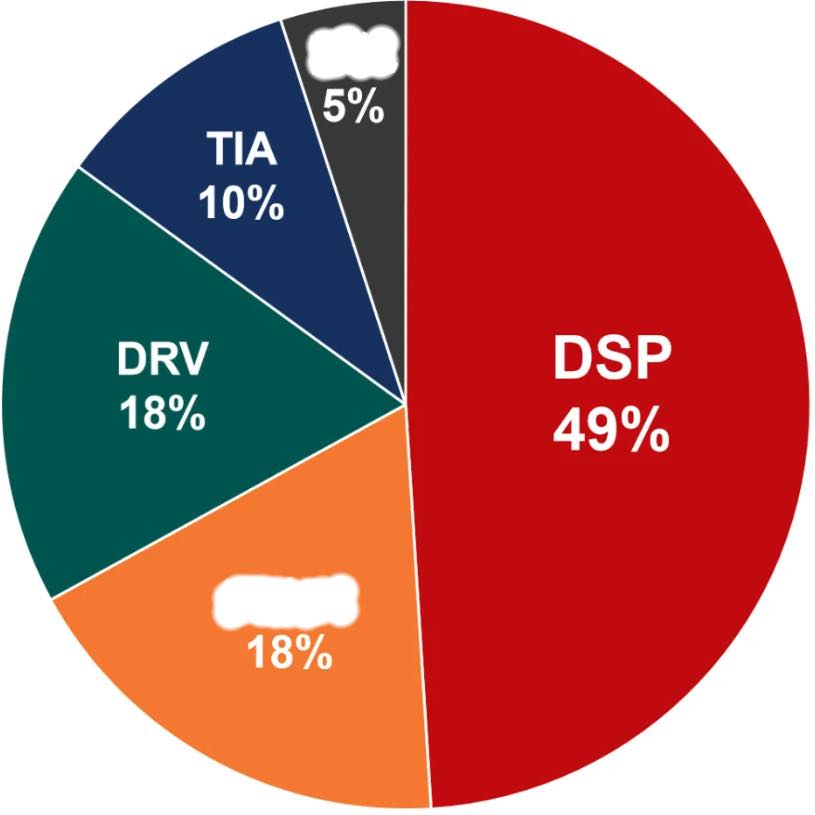
From a cost perspective, DSP’s BOM (Bill of Materials) cost accounts for approximately 20-40% of the 400G optical module.
The LPO solution is to remove the DSP/CDR chip in the optical module and integrate the relevant functions into the switching chip on the equipment side.
In the optical module, only the Driver (driver chip) and TIA (Trans-Impedance Amplifier) with high linearity are left, and CTLE (Continuous Time Linear Equalization, continuous time linear equalization) and EQ ( Equalization, respectively) are integrated—equalization) function, used to compensate for high-speed signals to a certain extent.
Advantages Of LPO
In summary, LPOs have advantages such as low power consumption, low cost, low latency, and easy maintenance.
- Low power consumption
Without DSP, power consumption will drop. According to Macom data, the power consumption of 800G multi-mode optical modules with DSP functions can exceed 13W. The power consumption of 800G multi-mode optical modules utilizing MACOM PURE DRIVE technology is less than 4W.
- low cost
It goes without saying. As mentioned earlier, the BOM cost of DSP used to account for about 20-40%, but this is no longer the case.
The driver and TIA integrate EQ, and the cost increases slightly, but the overall cost is still reduced.
Industry organizations have analyzed the BOM cost of an 800G optical module as about US$600 to US$700 and the cost of the DSP chip as about US$50 to US$70. The EQ function is integrated into the Driver and TIA, and the cost will increase by US$3 to US$5. After calculation, the total system cost can be reduced by about 8%, about 50 to 60 US dollars.
It is worth mentioning that DSP is also a technology mastered by a few manufacturers, such as Broadcom and Inphi. Eliminating DSP also reduces dependence on a few manufacturers to some extent.
- Low latency
Without DSP, one processing process is reduced, and the data transmission delay is also reduced. This advantage is particularly important for AI computing and supercomputing scenarios.
- Easy to maintain
This is relative to the CPO plan. In the CPO solution, if any component in the system breaks down, the power must be turned off, and the entire board must be replaced, which is very inconvenient for maintenance.
LPO’s packaging has not changed significantly. It supports hot swapping, simplifies fiber wiring and equipment maintenance, and makes it more convenient.
Current Challenges For LPOs
- Short communication distance
Of course, removing the DSP still costs money. TIA and Driver chips cannot completely replace the DSP, so the system’s bit error rate will increase. The higher the bit error rate, the shorter the transmission distance.
The industry generally believes LPO is only suitable for specific short-distance application scenarios, such as the connections between servers and switches in data center cabinets and between data center cabinets.
Develop primary LPO with connection distances from a few to tens of meters. In the future, it may be expanded to within 500 meters.
Standardization has just begun.
Industrialization Progress of LPO
Companies have previously proposed the LPO solution, but due to technical limitations, no results were achieved.
LPO was proposed again at this year’s OFC conference and quickly became the focus of industry attention.
Major customers in international markets such as AWS, Meta, Microsoft, and Google have all expressed interest in LPO. Many optical communication giants have also invested resources in research and development.
At present, companies such as Cambridge Technology have all launched 800G LPO solutions. Recently, some companies should have implemented small-scale shipments.
The key to the LPO solution lies in the chip. The main suppliers of high linearity TIA&Driver include Macom, Semtech, Maxim, etc.
According to predictions, LPO will achieve large-scale commercialization in 2024. More optimistic industry institutions believe LPOs will occupy half of the market share. More conservative institutions believe that the share of CPO/LPO will reach about 30% in 2026.
Conclusion
The logical essence of LPO is balance and trade-offs. It is based on specific application scenarios (short distance), abandons DSP/CDR, and sacrifices a little performance (bit error rate) in exchange for lower power consumption, cost, and delay.
Both LPO and CPO have strengths. Although LPO was born later than CPO, it will be implemented faster than CPO. According to current trends, LPO will be the most promising technology route in the 800G era.
With the development of the AIGC wave, data center optical networks will accelerate their evolution to 800G. The golden age of LPO is coming.
Leave a Reply