When we talk about computing power, we often associate it with machines and technology. But at its core, computing power refers to the ability to perform computations. Depending on how we define computing, this concept can range from solving basic arithmetic problems to complex reasoning tasks. It can apply to both machines and the human brain. So, What Is Computing Power?
What Is Computing Power? Narrow vs Broad Definitions of Computing
In a narrow sense, computing is the act of performing calculations on mathematical problems. For example, solving “1 plus 1” or working through a theory like the Goldbach Conjecture.
In a broader sense, computing refers to any process that involves handling information and producing a result. This could include analyzing data, making decisions, or drawing conclusions.
The key difference between the narrow and broad definitions lies in the type of tasks involved. But in both cases, the ability to carry out these tasks is what we call computing power.
The Brain is a Natural Computer
Human thinking is one of the most familiar and active forms of computing. Except when we are asleep or daydreaming, we are constantly thinking.
We collect information through our senses, and our brain processes it. This helps us make decisions, draw conclusions, and take action. In this process, the brain functions as a natural computing tool.
The brain’s ability to think and respond quickly reflects its computing power. In simple terms, computing power is how we solve problems.
How Humans Started Building Better Tools
Throughout history, humans have encountered many problems that the brain alone could not solve quickly or accurately. As a result, we created tools to support our thinking, like the abacus, counting rods, and the slide rule.
In the 1940s, after years of technological progress, electronic computers were born, marking the start of the information technology revolution.
These early computers were essentially large calculators. They were mostly used for military tasks, such as calculating ballistic trajectories. However, they had limited performance and took up enormous space. They also used a lot of power. This began to change with the invention of transistors, which replaced vacuum tubes and made machines smaller and more efficient.
The Beginning of the Chip Era
In 1958, the invention of the integrated circuit officially marked the beginning of the chip era. Chips contain a large number of electronic components, such as transistors, resistors, and capacitors, that can execute computing instructions.
Over the past few decades, with the help of Moore’s Law, the number of transistors packed into a single chip has continued to grow. This has led to massive improvements in performance.
As chip technology advanced, computers became not only more powerful but also smaller and more affordable. This led to the rise of personal computers and a booming ecosystem of software and hardware. Computers moved from labs and factories into homes, schools, and offices, eventually becoming central to modern life.
The Expanding Meaning of Computing Power
Today, chips have become nearly synonymous with computing power. When we discuss computing power, we often refer specifically to the capabilities of chips.
In industry terms, the narrow definition of computing power typically points to chip technologies like CPUs and GPUs. In contrast, memory and hard drive technologies are referred to as storage power, while software, including operating systems, databases, middleware, and applications, is known as the algorithm layer.

The broad definition of computing power includes all three elements: computing, storage, and algorithms.
Modern innovations like cloud computing, big data, artificial intelligence, and blockchain are all practical applications of this broader computing power. Essentially, anything that falls under information technology can be considered part of the computing power domain.
Chips and Devices: Carriers of Computing Power
Chips are the core of computing power. Devices like smartphones, smartwatches, PCs, and servers equipped with chips act as carriers of that power. When many servers are connected in data centers or computing clusters, they become platforms of computing power. These are the physical backbones that drive modern digital infrastructure.
The Value of Computing Power
The core function of computing power is to complete computing tasks.
Every computer operation, from running hardware to executing software, relies on countless such tasks. That means the computing power provided by chips is the essential energy source for the entire digital ecosystem.
With years of development, information technology has become embedded in every aspect of our work and daily life. IT systems help power our economy, education, entertainment, and communication. These systems, in turn, rely on computing power to function. It’s no exaggeration to call computing power the cornerstone of modern society.
Everyday Life and the Role of Chips
From ordering food and booking rides to chatting with friends or streaming videos, nearly every activity involves a mobile phone or an internet-connected device. What makes these devices functional and fast? The chip inside.

The digital services we use, such as e-commerce, online games, movies, and cloud storage, run on powerful servers housed in data centers. Chips provide these servers with the computing power needed to deliver smooth, reliable, and scalable services. The better the computing power, the better the user experience.
Driving Digital Transformation in Work and Industry
Across industries, there’s a strong push for digital transformation, a shift that combines modern IT and communication technologies with traditional business operations.
Whereas informatization once meant introducing IT tools into specific areas, digitalization is a broader change. It redefines how an entire organization operates, affecting everything from internal structure and workflows to customer interaction and revenue models.
The goal of digital transformation is simple: boost productivity, reduce costs, and sharpen competitiveness.
And behind all of it? Computing power. The stronger the computing power, the more capable the systems, and the greater the value they bring.
The Shift to Intelligence: Why Computing Power Matters
Some companies have already advanced beyond informatization and digitalization, moving toward full intelligence. This transformation brings significant efficiency gains and creates a “generation gap” in technology that sets these companies apart. In an increasingly competitive market, this advantage can determine whether a company survives or fades away.
There’s a common saying in the industry now: “All business models are moving toward mining the value of data.”
Data is now seen as the most valuable resource, like a gold mine. Computing power is the essential tool used to mine it. Through data processing, computing power can uncover insights, create value, and even generate new forms of wealth.
This process involves four stages: generating, transmitting, storing, and calculating data. Information technology (computing power) and communication technology (connectivity) work together to complete these steps.
First, sensors, cameras, and other devices collect information from the physical world and convert it into digital signals. These signals are then transmitted through technologies like 5G, Wi-Fi, or optical fiber. The data is stored on hard drives or similar media, then processed by chips to produce insights for decisions and actions.
With artificial intelligence, the role of decision-making is increasingly shifting from humans to machines. This highlights how crucial computing power has become—it’s what makes the entire process possible.
Computing Power and National Competitiveness
Beyond business, computing power is also a major driver of national development.
It affects the speed of digital growth and the overall level of intelligence in a society. According to research, every 1-point increase in the computing power index is capable of boosting a country’s digital economy by 3.5‰ and its GDP by 1.8‰.
There’s a strong global pattern: countries with larger computing power capacity tend to have more advanced economies.
In today’s world, computing power isn’t just a technical benchmark; it’s a key pillar of national strength.
Classification of Computing Power
Computing power supports every part of society, but the nature and intensity of that demand varies. Different sectors—such as consumers watching TV series, shopping online, or booking rides; industries like manufacturing, finance, or healthcare; and public services like urban governance or smart cities—all require different types and levels of computing power.
Each of these applications relies on different algorithms, and each algorithm places specific demands on the underlying computing infrastructure.
To better understand this landscape, computing power is generally classified into three main types: general computing, intelligent computing, and supercomputing.
General Computing Power
This refers primarily to the processing capability provided by CPUs (Central Processing Units). CPUs follow specific instruction sets that guide and optimize how tasks are executed, ensuring reliability and consistency.
There are two broad CPU architecture categories:
x86 architecture, historically developed and dominated by Intel, with a strong ecosystem and broad adoption.
Non-x86 architectures have gained ground in recent years. These include ARM, MIPS, Power, RISC-V, Alpha, and others. ARM, in particular, has become a popular choice for mobile and energy-efficient systems.
Intelligent Computing Power
Intelligent computing relies on GPUs (Graphics Processing Units), FPGAs (Field Programmable Gate Arrays), and specialized AI chips. These are optimized for tasks involving large-scale parallel processing, such as machine learning, deep learning, and real-time data analysis. Among them, GPUs have become especially crucial and are in high demand due to their versatility and performance in AI applications.
Supercomputing Power
Supercomputing is powered by supercomputers, which combine multiple computing systems to work in parallel using dedicated operating systems. These machines handle extremely complex, data-heavy problems and are mainly used in areas like advanced scientific research, national defense, and aerospace. While expensive, they offer unmatched performance and precision.
In data centers, computing tasks are often split into general-purpose computing and HPC (High-Performance Computing). HPC itself can be further divided into three major categories:
Scientific computing: used in disciplines such as physical chemistry, meteorology, life sciences, environmental studies, and space exploration.
Engineering computing: supports applications like computer-aided design and manufacturing, electronic simulations, and electromagnetic modeling.
Intelligent computing: focused on AI-related tasks including machine learning, deep learning, and advanced data analytics.
Intelligent Computing and the Growth of Hash Rate
Most people are familiar with scientific and engineering computing—two fields that generate massive amounts of data and demand extremely high computing power. Take oil and gas exploration, for example. It’s like performing a CT scan of the Earth’s surface. A single project can produce raw data volumes exceeding 100 terabytes, and sometimes reaching 1 petabyte. Handling that scale of data requires significant computing power.
In recent years, intelligent computing has gained widespread attention. Fueled by the rise of AIGC and large-scale AI models, industries are investing heavily in intelligent computing, creating enormous demand for computing resources.
Data centers have evolved accordingly and are now categorized based on the type of computing power they support:
General data centers handle everyday internet services.
Intelligent computing centers focus on AI-related tasks and workloads.
Supercomputing centers (e.g. Tianhe-1) are built for large-scale scientific and engineering applications.
In addition to traditional processors like CPUs and GPUs, new specialized chips have emerged to meet the needs of specific computing tasks. These include:
TPUs (Tensor Processing Units) for deep learning,
NPUs (Neural Processing Units) for AI inference,
DPUs (Data Processing Units) for networking and storage-related tasks.
Hash Rate Trends and the Future of Computing Power
Computing power and connectivity together form the backbone of the digital economy. As informatization, digitalization, and intelligent systems continue to expand, society’s need for computing power is growing rapidly.
Several trends have emerged:
Computing power demand is accelerating
The rise of smart devices, IoT, autonomous systems, and digital transformation across industries has led to an explosion in data and a corresponding spike in computing needs. According to Roland Berger, between 2018 and 2030:Computing power demand for autonomous driving will increase 390 times.
Smart factory demand will rise 110 times.
Per capita computing power in major countries will grow from less than 500 GFLOPS to over 10,000 GFLOPS by 2035.
Massive computing growth is expected.
Inspur’s AI Research Institute forecasts that global computing power will reach 6.8 ZFLOPS by 2025—30 times more than in 2020.
To meet these demands, several strategies must be adopted:
Improve chip performance
Continued innovation in chip manufacturing is essential. This includes integrating more transistors and pushing process nodes closer to 1nm. However, with Moore’s Law approaching its physical limits, further advancements will be more expensive and challenging.Expand infrastructure
Building more data centers and scaling up computing platforms will help meet society’s computing needs on a large scale.Enhance efficiency through new models
Technologies like the East-West Computing project and computing power networks aim to distribute workloads more effectively, improving resource utilization and reducing pressure on centralized systems.
The Growing Importance of Intelligent Computing Power
While general computing still dominates overall demand, intelligent computing power has been growing rapidly, especially with the rise of AI technologies like AIGC large models.
According to the 2023 China Comprehensive Computing Power Index by the China Academy of Information and Communications Technology, general computing currently accounts for 74% of total computing power, while intelligent computing makes up 25%. Though still smaller in proportion, intelligent computing power is increasing at a remarkable 45% year-on-year, outpacing the overall growth of computing power.
This rapid growth highlights how AI advancements are reshaping the computing power landscape. Intelligent computing centers will play an increasingly significant role in future infrastructure, marking a golden age for the intelligent computing industry.
Computing Power Everywhere
In the early days, computing power was centralized in mainframe computers. With the rise of personal computers, it shifted closer to users. The explosion of mobile phones and internet connectivity in the 1990s further dispersed computing power across devices and locations.
Today, mobile devices with ever-improving chips offer computing power comparable to PCs. Coupled with widespread 5G, Wi-Fi, and other communication technologies, countless connected devices now carry their own computing capabilities.
Cloud computing brought the next evolution by centralizing computing power in data centers accessible via the internet. Edge computing is now taking this further, distributing computing resources closer to users at the network’s edge, creating a more flexible and efficient computing environment.
The Ubiquity of Computing Power
All of this marks the beginning of computing power flowing everywhere, from the cloud to the very edge of networks. This widespread presence is what we call the ubiquity of computing power.
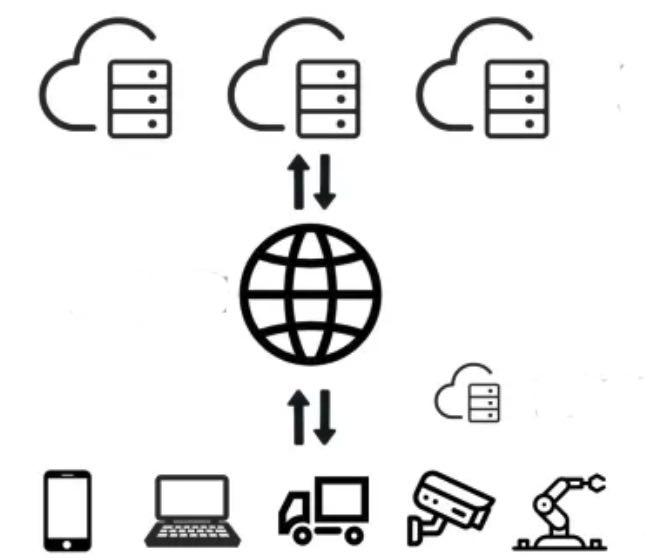
The computing power network mentioned earlier is a clear example of this ubiquity, connecting countless devices and systems seamlessly.
Green and Low-Carbon Computing Facilities
As computing power continues to accelerate technological progress, its growing energy demands may become a significant challenge. It is estimated that data centers alone can consume a notable portion of a country’s electricity, potentially accounting for several percent of national usage. This level of consumption could rival the output of major power plants or the energy needs of entire metropolitan regions.
Such massive power use challenges efforts to reach “dual carbon” goals and threatens sustainable economic development. Reducing energy consumption in computing power infrastructure is now a key focus for the industry.
Effective energy-saving methods include improving power efficiency through basic research, material upgrades, and technology innovation. Increasing renewable energy use while reducing fossil fuels is also crucial.
Encouragingly, research in energy conservation for computing power has made progress. The “Green Development 2030” report predicts that by 2030, global digital infrastructure energy efficiency will increase 100 times, renewable energy will make up over 50% of power generation, and digital penetration across industries will reach 50%.
Accelerating Exploration of New Computing Technologies
Rising demand for computing power puts heavy pressure on traditional semiconductor technologies, which are approaching physical limits. This has driven experts to explore new computing paradigms like quantum computing, optical computing, and brain-inspired computing.
Quantum computing leverages quantum superposition and entanglement to deliver power far beyond classical computers. Optical computing uses light waves to process, store, or transmit data. Brain-like computing mimics neural networks to enable intelligent learning and decision-making.
Though still largely experimental and facing challenges, breakthroughs in these areas could completely transform computing and usher in a new era for society.
Leave a Reply