In today’s article, let’s discuss an exciting topic: what is a cloud phone and what exactly does it do.
Speaking of cloud mobile phones, many people may not feel unfamiliar. Yes, it is indeed not a new term. As early as around 2011, some Chinese manufacturers launched the concept of cloud mobile phones. By the way, it has been around for 12 years.
As we all know, cloud computing technology has developed rapidly in recent years. We are clamoring to “go to the cloud” daily, which has become indispensable to people’s work and lives.
We can have cloud meetings, offices, games, gatherings, travel, and worship based on advanced cloud technology.
Everything Is Shifting To The Cloud
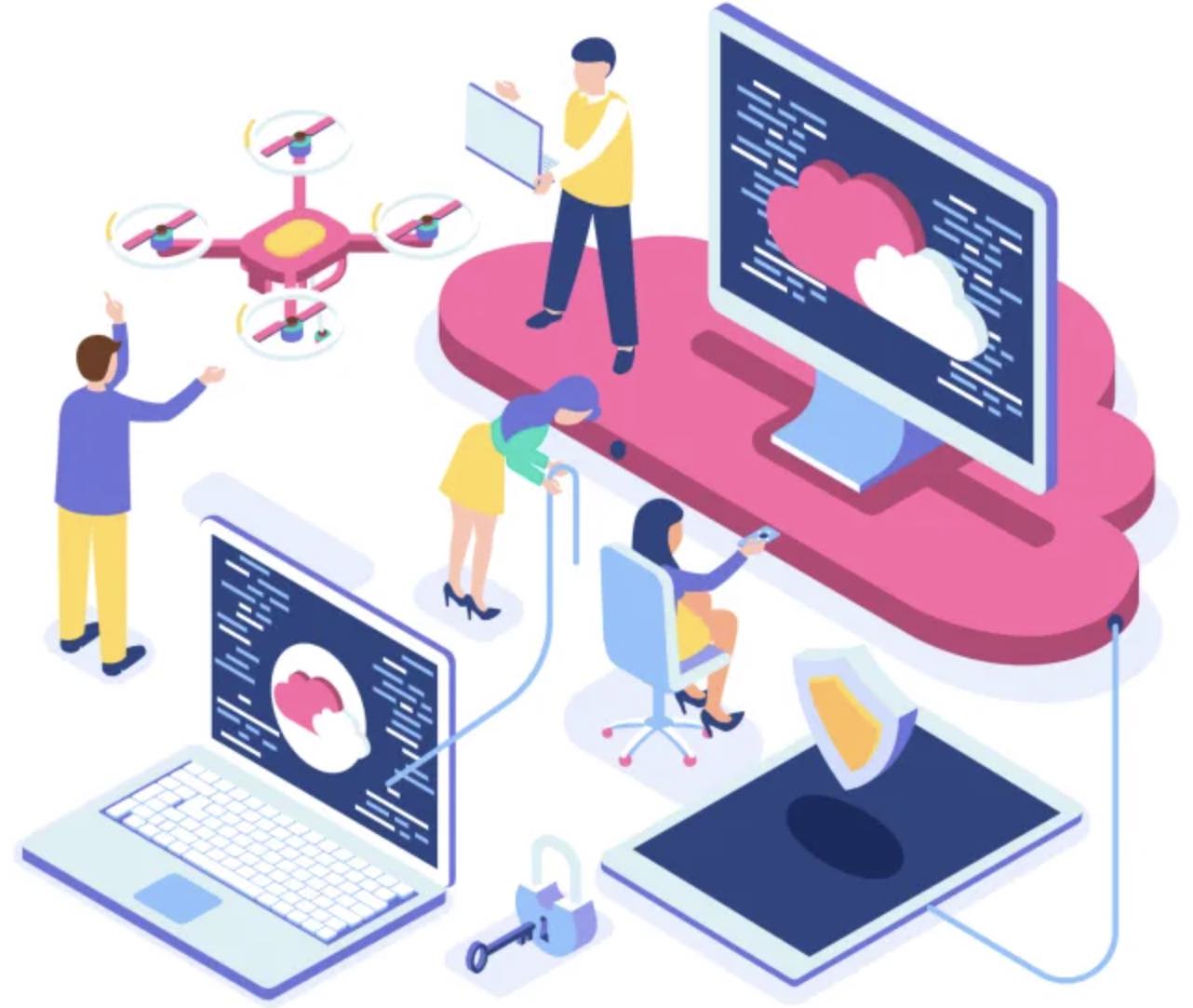
Cloud mobile phones are actually an innovative application based on cloud technology.
Simply put, it virtually constructs a mobile phone on a cloud platform, and users can open the App through the physical mobile phone to control the virtual mobile phone and obtain the same experience as an actual mobile phone.
Not long ago, on May 17, at the 2023 China Mobile “Digital Benefit Plan” conference, China Mobile officially released its mobile cloud mobile phone products. Using this product as a case study, we might as well learn more about what the cloud phone can do and what magic it has.
Cloud phone: What Exactly Does it Do?
Since most of us have physical phones, why do we need cloud phones? This starts with the functions and positioning of mobile phones.
The mobile phone was born in 1973 (this year happens to be the 50th anniversary). As a great invention, it has greatly strengthened communication and connections between people and also made social interaction closer.
After the emergence of smartphones and the Internet, the functions of mobile phones have become more powerful, integrating almost all digital products. They can be used in all fields, such as food, clothing, housing, transportation, leisure, and entertainment.
In fact, a mobile phone is a mobile ultra-small computer. Computing power is its core, and cameras, gyroscopes, screens, microphones, etc., are its functional accessories.
All functions on the mobile phone are implemented around the SoC main chip (which also integrates graphics processing and baseband functions).
You may also like: Things You Need to Consider in Choosing the Right Cloud Storage for Your Business
The computing power of a chip determines its capabilities.
So, here comes the problem. There are high and low configurations of mobile phones. High-end phones are more expensive. If you buy low-end phones, your experience will be limited.
Moreover, mobile phone products are upgraded quickly. The configuration may start falling behind after one or two years of use.
How Does A Cloud Phone Operate?
The mobile phone’s SoC chip determines the computing power of a physical mobile phone. Cloud phones are built on the cloud, and cloud capabilities determine their computing power. Cloud capabilities are theoretically unlimited.
Therefore, the essence of cloud mobile phones is to create a “secondary machine” with stronger computing power in the cloud to complete tasks that cannot be completed or are inconvenient to complete with physical mobile phones.

Contextually, cloud phones can be defined as part of the “3+2+1” computing power terminal product system. It serves the purpose of responding to users’ needs for “lighter, faster, more secure, and more convenient” computing power services.
For the product in our review, China Mobile runs the operating system, storage, computing, rendering, and applications of the cloud phone in the cloud.
The local physical phone mainly implements user interaction functions such as a screen, microphone, and earpiece.
During the operation, the real-time picture of the cloud mobile phone is transmitted downlink to the local device for display in audio and video streams. The local device uplinks and synchronizes user instructions, sensors,s and other data to the cloud.
What Are The Functions that a Cloud Phone Supports?
Functions that can be achieved by ordinary mobile phones, such as making calls, sending text messages, chatting on WhatsApp, watching videos, etc., can be easily implemented by cloud mobile phones.
Apps in the mobile store can also be downloaded and used on cloud phones. Based on China Mobile’s powerful network and cloud capabilities, cloud mobile phones can install apps in seconds.
When playing games on a cloud phone, the game screen rendering and other work are completed in the cloud, and the local phone only needs to receive the rendered video stream. This has dramatically lowered the threshold for playing high-end games on local mobile phones, and large-scale games can be played easily on LOW-end phones.
It is worth mentioning that the computing and storage resources required for watching videos, playing games, installing, and using various APPs of cloud mobile phones are provided by mobile cloud and do not occupy the computing power and storage space of personal physical mobile phones. Physical mobile phones will consume less power and can significantly increase the standby time.
Cloud Phone, Who Can Use It?
Next, let’s take a closer look at the application scenarios and target users of cloud mobile phones.
Those Who Love Seamless Gameplay
At the beginning of the birth of cloud mobile phones, there was a critical need scenario: game interruptions.
Friends who play games know that some games require players to minimize or pause the game for a long time.
If it is your physical mobile phone, sometimes you have to work, and sometimes you have to do other things, so you may need to quit. Moreover, if you pause the game, the phone will get very hot, and the battery life will be stretched.
With cloud phones, these problems are solved. The game can always run in the cloud without being disconnected or running out of battery. Moreover, as mentioned before, even using a low-end machine will not prevent you from playing large games.
Video Editing Or Processing
In addition to games, if you want to edit and process videos, you can do it on the cloud phone. The video rendering capabilities of the cloud will significantly shorten your waiting time and improve video production efficiency.
Official Use
Since the popularity of mobile phones, users have required dual SIM cards. Many users still retain the habit of using two mobile phones at the same time. The main reason is to differentiate between work and life.
You can migrate your office environment to the cloud with mobile cloud phones. When working, open the cloud phone to communicate, participate in meetings, view files, etc. After getting off work, switch to a physical phone and return to life.
For businesses, cloud mobile phones can be handed over as office assets. When a sales employee resigns and hands over the cloud phone to his successor, important data such as customer address books, work chat records, and cloud data are handed over.
Mobile cloud phone supports multiple machines and multiple numbers. Not only can you open multiple cloud phones at the same time, but you can also bind multiple card numbers to one cloud phone.
This easily meets the need to open multiple applications and can realize multiple identities and multiple accounts being online simultaneously.
If you only have one physical phone, you must switch logins repeatedly, which can be inconvenient.
Use Cloud Mobile Phone To Protect Your Privacy
The multiple identity implementation of cloud mobile phones also has natural advantages in protecting user privacy.
Users can use the different identities of cloud mobile phones to protect their true identity information by using apps such as WeChat, QQ, WhatsApp, and Telegram.
When people shop for new houses, they are often asked to leave their phone numbers. With a cloud phone, you can submit your cloud phone number to avoid exposing your actual phone number, thus effectively avoiding spam calls.
For individual and home consumer users, cloud phones also have a huge advantage: multi-screen sharing.
TV Version Of Cloud Phones
With the TV version of a cloud phone, the TV can be turned into a “big phone” so that a low-end TV can also play high-end games on the phone. The larger the TV screen, the better the gaming experience will be.
Private Network Scenario
The last thing to mention is the private network mobile phone scenario.
Now, the entire society is undergoing digital transformation, and many enterprises have established their industry private networks, such as bank private networks, education private networks, campus private networks, etc.
Applying cloud mobile phones to private networks can achieve secure access to private network data, prevent the loss of business assets, and achieve manageability and control.
As you can see, cloud mobile phones are not to replace physical mobile phones but to become an extension of physical mobile phones.
Its strong computing power, multiple identities, environmental isolation, and other advantages can meet the needs of many. Its user base is very broad. E-sports, technology enthusiasts, online social experts, video uploaders, corporate office workers, home users, private network users, and government users are all potential target customer groups, and the market potential is tremendous.
Why Is Cloud Mobile Phone Just Becoming Popular Now?
If the function of cloud mobile phones is so powerful, why has it not developed in the past ten years?
The reason is simple: the technology is immature and cannot support user experience.
Cloud mobile phone is an application based on cloud and network communication technology. Computational processing is completed in the cloud. The processed data must be synchronized locally and in the cloud through the network.
If the network speed is insufficient or the delay is too large, lags will occur.
Mobile Cloud Phone By China Mobile
Recently, China Mobile launched the “Mobile Cloud Phone” because they have strong information and communication infrastructure.
Regarding connectivity, China Mobile has now built the world’s largest 5G network, with more than 1.55 million base stations and nearly 700 million 5G package users, achieving continuous coverage in urban areas, counties, and towns nationwide.
In terms of computing, China Mobile has more than 600,000 diversified computing servers and more than 1.2 million data center racks.
The mature and complete infrastructure lays the foundation for the ultimate experience of mobile cloud phones.
User operation and cloud response information are transmitted through the large-bandwidth, low-latency 5G network, enabling a near-real-time, sensory-free experience. The powerful cloud computing power allows users to have a “high-end mobile phone” anytime.
In addition to operational smoothness and stability, another constraint of cloud phones is traffic and information security.
As the strongest Chinese provider, China Mobile also has advantages in these aspects.
The “No Data throttling” launched by Mobile Cloud provides a minimum of 30GB of directional traffic per month, eliminating users’ traffic anxiety.
Not to mention information security. China Mobile is a state-owned enterprise, and Mobile Cloud also has technical solid reserves in security protection so that users can rest assured.
Summary And Conclusion
China Mobile is building a huge computing network strategic layout.
Since the rise of mobile Internet, from 3G to 4G, operators have encountered severe challenges from Internet OTT manufacturers. With the continuous deepening of digital services, operators’ relatively single connection business can hardly become the focus and control point of the digital ecosystem.
Therefore, after entering the 5G era, China Mobile has continued to increase its investment in computing power, combining its network advantages to promote computing and network integration.
As a computing power terminal, cloud mobile phones are regarded by China Mobile as the “computing leader” for the public. Leveraging its own 5G network advantages and “powering computing with the network” to achieve inclusive computing power, it can serve users’ computing power needs and prosper digital businesses.
In this unprecedented digital wave, let us wait and see whether cloud mobile phones can genuinely achieve commercial success!
Leave a Reply