As we all know, wireless spectrum resources are becoming increasingly scarce. To meet the growing demand for higher wireless transmission rates, communication systems are shifting to higher frequency bands. However, high-frequency radio waves have weak penetration and poor diffraction capabilities. When they encounter obstacles, they are easily blocked, leading to a drop in signal quality.
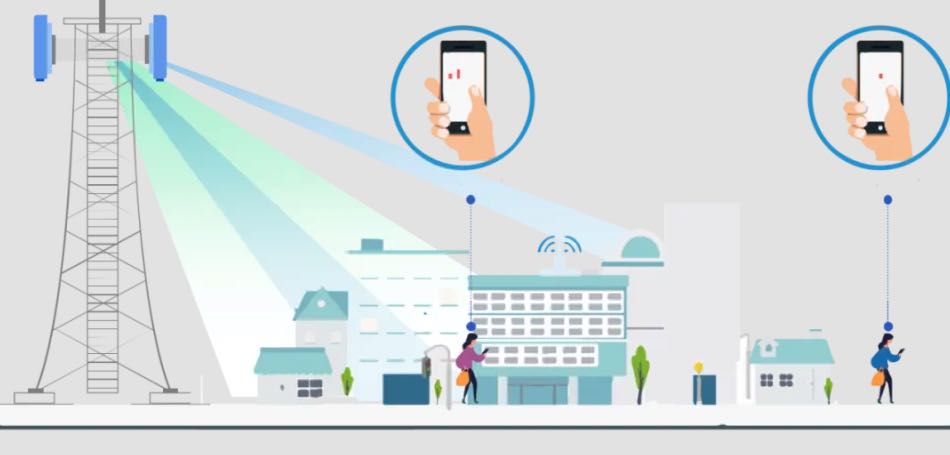
To ensure continuous coverage and maintain signal strength, operators must build more base stations, especially in densely populated urban areas. However, increasing the number of base stations significantly raises network construction and maintenance costs.
To address these challenges effectively, smart metasurface technology, also known as Reconfigurable Intelligent Surface (RIS), has emerged.
Smart Metasurface RIS explained: Working Principle
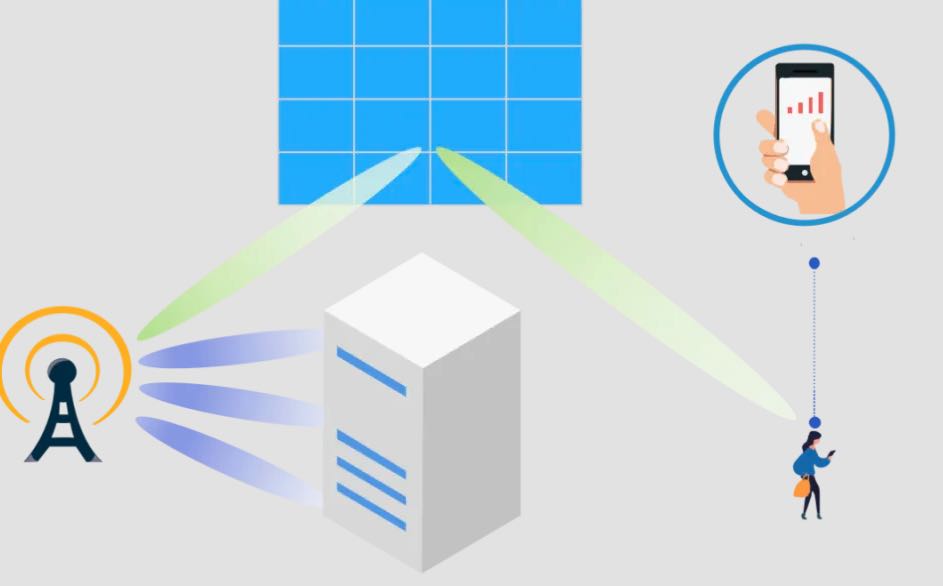
A smart metasurface, formally known as a Reconfigurable Intelligent Surface (RIS), is a cutting-edge technology that enhances wireless communication. It combines artificial electromagnetic metamaterials with modern mobile communication systems to enable intelligent control of wireless signals.
By dynamically altering the propagation path of electromagnetic waves, RIS can optimize signal direction, strength, and coverage, revolutionizing the way wireless networks operate.
Does it sound like magic?
In reality, its operation is firmly rooted in the physics of electromagnetic wave propagation.
A Reconfigurable Intelligent Surface (RIS) is composed of reconfigurable artificial electromagnetic metamaterials, comprising a large number of independent, passive, subwavelength resonant units. These tiny elements can independently manipulate the electromagnetic properties of waves, such as phase, amplitude, and polarization.
By adjusting the structure, spatial arrangement, and configuration of these units, RIS can control the reflection, scattering, and refraction of radio waves. This capability helps mitigate the adverse effects of multipath fading, a common issue in wireless transmission where signals take multiple paths and interfere with one another.

In simpler terms, without relying on complex coding or active radio frequency (RF) processing, RIS can redirect and enhance incoming electromagnetic waves in a specific direction, significantly improving both signal quality and communication efficiency.
Traditional Communication vs. RIS
Traditional communication systems rely heavily on fixed base stations and static antenna layouts, passively adapting to their surrounding channel environment.
In contrast, Reconfigurable Intelligent Surfaces (RIS) offer a dynamic solution. They can flexibly adjust signal coverage and quality in real-time, based on constantly changing channel conditions.
Put simply, RIS acts like a smart mirror that controls how wireless signals (like light) are reflected. Just as a mirror can reflect light at different angles, RIS can steer radio signals in desired directions, ensuring a stable and strong network connection, no matter where the user is located.
Currently, RIS is one of the key technologies under active research for 5G-Advanced (5G-A) and 6G networks. It holds the potential to overcome the uncontrollable limitations of traditional wireless systems, reshape the transmission environment, and tackle long-standing challenges like signal coverage gaps and high energy consumption.
Hardware Structure
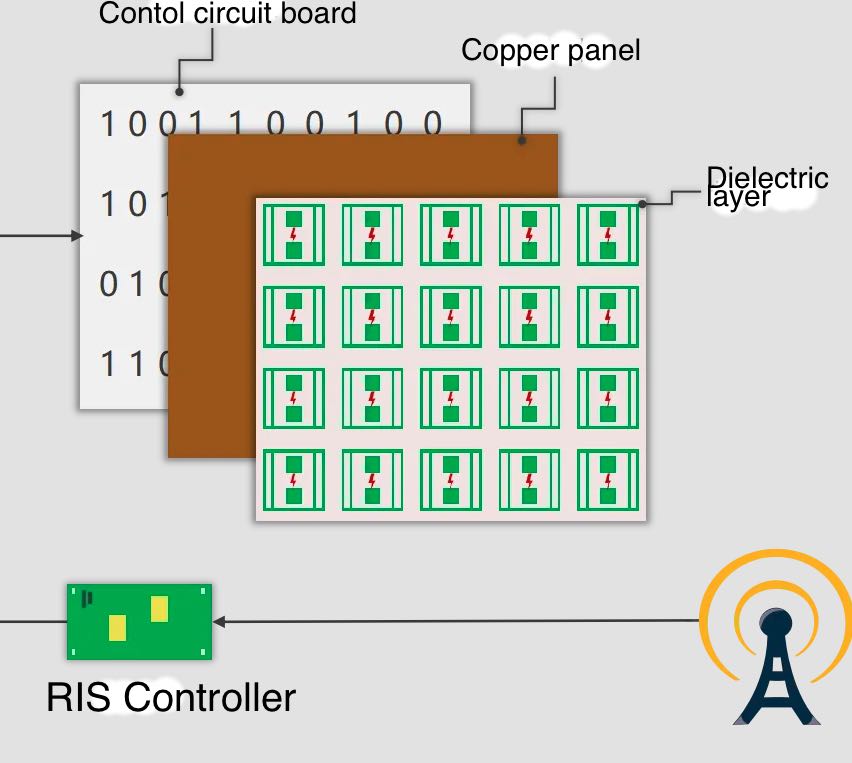
The typical RIS hardware consists of three main layers and a controller:
Metasurface Layer (Outer Layer):
This is the main functional layer responsible for regulating electromagnetic waves. It contains a large number of regularly arranged electromagnetic units, typically made of metal, dielectric materials, and control switches.The control switches—often PIN diodes, varactor diodes, liquid crystals, or graphene-based components—are used to tune the electromagnetic behavior of each unit.
By adjusting the bias voltage, the amplitude and phase of the electromagnetic waves can be controlled. For example, altering the phase of each unit allows the reflected waves to be combined and directed precisely.
Metal Backplane (Middle Layer):
This layer serves as a ground plane that prevents signal leakage and isolates the metasurface from the control circuitry behind it.Control Circuit Board (Innermost Layer):
This board distributes electrical signals to each unit, based on a codebook determined by the controller. It enables real-time manipulation of the metasurface’s behavior.Controller:
The controller communicates with the base station and selects the appropriate codebook, which determines how signals are distributed across the control board. This ultimately dictates the overall behavior of the RIS system.
Development Stage
Unlike standard walls, which reflect signals in a diffuse or specular manner, RIS offers precise beamforming capabilities. It can intelligently adjust the reflection angle of wireless signals in real time, based on the user’s location.
This unique ability to reshape the wireless environment makes RIS a game-changing technology for future network evolution, particularly as we enter the 6G era.
RIS Beamforming Development Stages
The intelligent beamforming capabilities of RIS have evolved through three major development stages:
Phase 1: Passive Static RIS
At this stage, RIS systems use fixed beams to reflect signals. They’re mainly used to eliminate coverage blind spots and enhance signal strength in areas with weak connectivity. This setup significantly improves overall network coverage.
Phase 2: Semi-Static RIS
Here, the RIS can make periodic adjustments to its beam direction. By altering the phase and orientation of the beams at regular intervals, the system can widen the coverage area and help boost data rates and capacity in the network.
Phase 3: Dynamic Intelligent RIS
This advanced stage enables real-time control of beams based on the changing channel environment. Using adaptive coding algorithms, the RIS can dynamically track users and deliver optimal beam responses. It offers a smart and responsive solution to continuously changing wireless conditions.
Application Scenarios
RIS technology is highly adaptable and can be deployed in various environments to improve signal quality and coverage. It’s especially useful in addressing weak signal zones and preparing networks for future 5G-Advanced and 6G demands.

Outdoor-to-Outdoor (O2O)
In urban areas where buildings or other obstacles block direct signals, RIS can be placed between the base station and users to establish reliable non-line-of-sight (NLOS) connections. This helps eliminate blind spots, improve signal robustness, and increase capacity in busy locations.
Outdoor-to-Indoor (O2I)
Buildings often weaken or block wireless signals from outside. By placing RIS panels on building exteriors, outdoor signals can be redirected indoors, enhancing indoor coverage and ensuring better connectivity deep within buildings.
Indoor-to-Indoor (I2I)
Large indoor spaces like offices, malls, or airports often suffer from uneven signal distribution. Deploying RIS units inside these environments can help reflect signals across different rooms or sections, improving the user experience and ensuring a more stable and reliable communication system.
Depending on different application scenarios and deployment environments, ZTE has introduced a range of RIS products, categorized into two main types: reflective RIS and transmissive RIS.
Reflective RIS is designed to reflect signals from the base station as needed. It can be installed in various locations, such as lamp posts, building walls, or advertising boards. When obstacles like tall buildings block the direct path between the base station and the user, deploying reflective RIS allows the signal to bypass the obstruction and reach the user by reflecting around it. This effectively improves signal coverage and quality in difficult-to-reach areas.
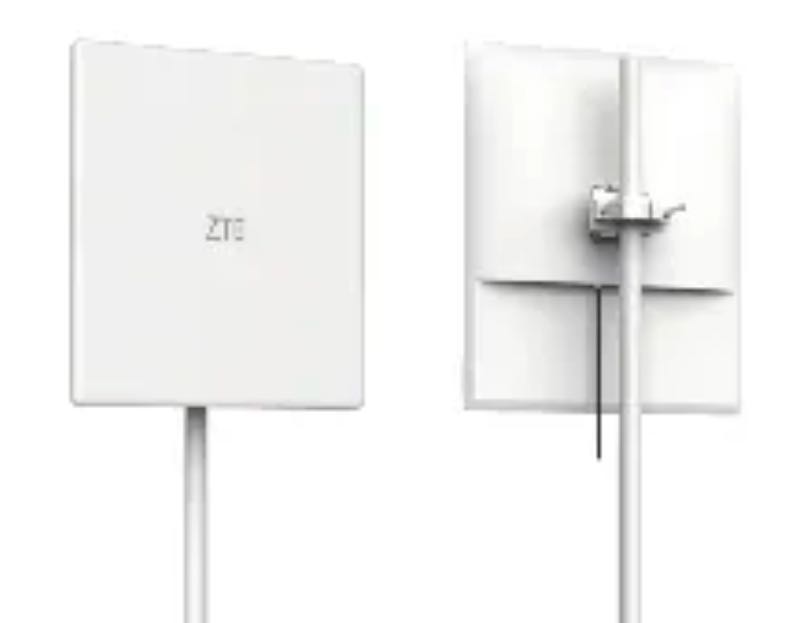
Transmissive RIS is designed to enhance signal penetration, particularly in scenarios where signals need to pass through physical barriers like glass. It is typically installed on windows of buildings or trains to improve both indoor signal coverage and high-speed rail connectivity.
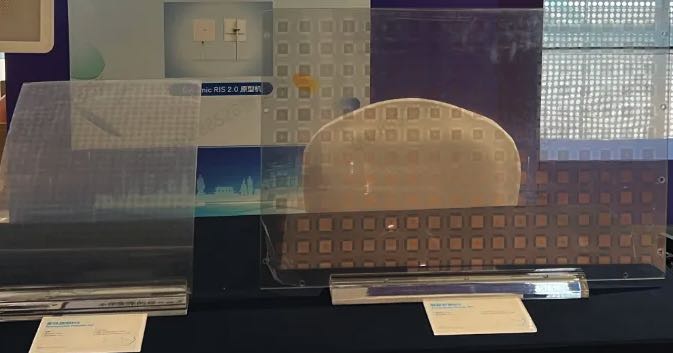
To avoid blocking natural light, transmissive RIS is usually made transparent, which is why it’s also referred to as transparent RIS.
Technical Advantages of RIS
Compared to traditional base stations, RIS offers several key advantages:
Low Cost: RIS systems do not rely on complex RF components, making the hardware simpler and more affordable.
Low Energy Consumption: Because RIS is primarily composed of passive elements, it requires very little power. In fact, future implementations may rely on solar or battery power.
Easy Deployment: RIS units are lightweight, slim, and can be flexibly installed. They don’t require towers or equipment rooms, making them easier and faster to deploy and maintain.
Conclusion
In summary, Reconfigurable Intelligent Surface (RIS) is a promising wireless communication technology poised to play a major role in the evolution of modern networks. As the technology matures, various types of RIS solutions will increasingly serve as powerful supplements and extensions to traditional base station coverage, improving signal quality, reducing energy use, and supporting next-generation connectivity.
Leave a Reply