How much battery power is left in a mobile phone is a “DISTURBING” situation for many people in modern society.
People’s strong demand for mobile phone charging has also spawned many gimmicks on the market: wireless charging, double-speed charging, and high-energy charging are some terms used with mobile phone charging.
Should you plug in the phone or the charger first when charging? Or let’s say, what is the correct order for charging a mobile phone?

Should you Plug in the phone or the Charger first when charging?
Below are the lists of wrong charging methods/sequences that might cause damage to your mobile phone.
1. Does the Phone have to be Fully Charged? Old Rules For Charging Mobile Phones
Some theories say you should recharge the mobile phone after the power is exhausted. When you need to charge your phone, look at here to fix the timer to save your phone’s battery life. There is a saying that this is conducive to battery maintenance and that charging at any time will affect the battery life. Sadly, the theories above are relatively outdated.
Nickel-Cadmium Batteries and their Disadvantages
The rechargeable batteries widely used in the early years, such as nickel-cadmium batteries, were mainly made of nickel hydroxide and metal cadmium. The disadvantage is obvious: there is a memory effect.
When the power is not exhausted or fully charged many times, the battery capacity will “remember” the power when charging and power off, and regard it as the maximum and minimum power value, resulting in the battery capacity reduction.
But now, nickel-cadmium batteries have been gradually eliminated due to heavy metal pollution, high weight, and low energy density and have been replaced by lithium-ion batteries.
Should you plug in the phone or the charger first when Charging a Phone Using a lithium-ion battery?
Smartphones mostly use lithium-ion batteries. Compared with nickel-cadmium batteries, its advantages are high energy density. In simple terms, it can store more electricity under the same volume or weight; the memory effect is weak, even if it is not fully charged. Just unplug it, and it won’t affect anything.
Basic Rules Governing Charging and Recharging of Lithium-ion Batteries
The precautions for lithium-ion batteries are the opposite of those for nickel-cadmium batteries.
- Don’t recharge when they are out of power,
- don’t overcharge them,
- and don’t need to charge deep and discharge every time.
- The life of a lithium-ion battery is related to the charging cycle. A cycle is realized whenever the power is used up to 100%. The more cycles, the more obvious the decline in battery life.

- Research data on 11 kinds of lithium ions shows that after 250 cycles, the battery capacity will decline significantly.
- After 300-500 cycles, the battery capacity will drop to 80% of its original capacity.
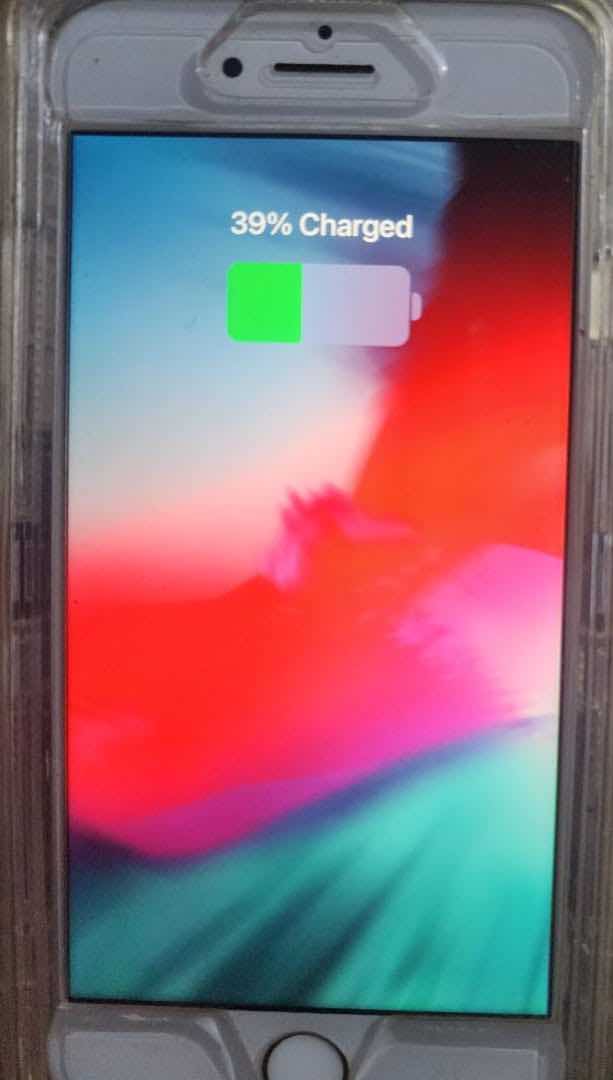
What are the Plugging and Unplugging Principles For Charging Mobile Phones?
According to data, when the lithium-ion battery is intensely charged and discharged, the material structure of the positive and negative electrodes will be destroyed.
Lithium-ion batteries mainly rely on the movement of lithium ions between the positive and negative electrodes. Once the space for their activities decreases, the battery capacity will decrease accordingly.
Therefore, compared to “full discharge,” “multiple and less charging” is more suitable for the current charging habit of mobile phones.
In addition to the battery power level before and after charging, people easily overlook another problem that affects the battery’s service life.
2. Should I Plug in the Phone First or the Charger First?
Do you connect the plug to the power supply first, then use the data cable to connect to the mobile phone, or connect the data cable to the phone first and then connect the plug to the power supply?
The answer is: always connect the charging adapter first
Don’t Miss This: This Three Bad Charging Habits Will Damage Your Phone’s Battery In Less Than A Year
What kind of impact will such a slight difference have?
Things to note: the voltage used globally is between 110V to 220V, but the voltage of mobile phone chargers is often within 5V.
When charging mobile phones, the charger will convert high-voltage current into low-voltage DC through a transformer and then send it to a cell phone.
At this time, if the charger is connected to the mobile phone and then plugged into the power supply, the charger may lose its self-adjusting ability, thereby outputting a surge voltage.
Surge refers to the instantaneous overvoltage exceeding the standard working voltage. Sometimes that flickering spark you see when you plug or unplug a switch is primarily a surge.
Although the time is only one-millionth of a second, it can cause a lot of damage to the mobile phone’s battery for a long time.
And when the charger is plugged in first and then the phone is connected, this situation seldom happens unless the current is unstable.
After charging, should I unplug the phone or unplug the plug after charging?
The answer is: unplug the phone first. Because at the moment the charger is unplugged, a reverse instantaneous current will also be generated, which will accelerate the aging of the battery.
The principle seems complicated, but it is not difficult to remember the correct order of plugging and unplugging.
The best way to remember the correct order is by treating the charger, the charging cable, and the socket as one. When charging, the mobile phone is “attached,” and when it is fully charged, it is “discarded”. This operation is much safer.
3. Pay Attention to Charging Power Banks
Many people carry a power bank in case they can’t find a socket when they go out. It is very convenient; a small power bank can maintain the regular operation of the mobile phone and is a lifesaver.

But there are also many gimmicks and misunderstandings about charging power banks.
At present, there are many charging power banks on the market that claim to be 20,000 mAh.
Most mobile phones, even the flagship version, have a battery capacity of less than 5000 mAh. After buying a 20,000 mAh power bank, wouldn’t it be possible for a family of three to travel for two days without worrying about it?
When you repurchase it, you will know it will run out of power after charging it twice. Could it be that the merchant is falsely advertising?
Here is the explanation; The capacity marked by the merchant is mostly the capacity of the battery itself, that is, the sum of the power of multiple lithium-ion batteries in the battery.
Since power will be lost during the conversion process, the adequate power that the power bank can provide to the mobile phone must be low on this data.
If you want to know how often the power bank can be used, you must carefully read the manual’s small print: rated capacity. This is the minimum dischargeable capacity tested in the laboratory.
A media outlet has done an evaluation. For those power banks claiming to be 20,000 mAh, the actual capacity difference between the largest and the smallest can be as low as 4,000 mAh, which is enough for most mobile phones to be fully charged once.
When using the power bank, you should also pay attention. Because the power bank uses a lithium-ion battery and its lifespan is also affected by the charging cycle, it is best not to charge it for a long time.
4 Summary of How to charge A Smartphone Correctly?
You will be surprised that, as a regular phone user, there are some charging methods you think are correct, but they are not.
- You Shouldn’t Mix Charging Cables and Chargers!
It is common practice to buy a mobile phone with a matching charging device, but in recent years, some manufacturers no longer give chargers for environmental protection.
The price on the official website is too high so many people will choose cheaper ones. If you are unlucky, your pet cat at home can bite the charging cable and render it useless. In other words, several people use phones with mismatched charging cables and chargers.
As a result, it is believed that unsuitable chargers will cause short circuits of batteries and affect their service life.
This statement underestimates the charger.
There is usually an intelligent chip inside the charger, which can recognize the current and voltage required by the mobile phone and adjust it accordingly.
For example, if you buy a fast charging head, but the mobile phone does not support fast charging, then the fast charging head will automatically adjust to suit the mobile phone—input power.
Some people complain that the fast charging head does not work, which is the principle.
However, try to look for the original brand when buying, and don’t be greedy for petty cheapness to buy counterfeit chargers. After all, the configuration inside the counterfeit charger is hard to say, and the current and voltage required by the mobile phone will likely not be recognized, and the mobile phone will be damaged.
Do not charge while playing games Or Running Resource-Internsive Apps.
Some people think discharging and charging the battery simultaneously will affect the lifespan. The sudden temperature rise caused by charging while playing affects the battery’s lifespan.
Every one must have noticed that the phone will get hot when playing high-configuration games or using fast charging.
A survey shows that even if the mobile phone is not used, the increase in temperature will still accelerate the reduction of battery capacity.
Therefore, it should be noted that do not buy too thick a protective case for the mobile phone.
There are many fancy protective cases on the market, which are good-looking, but not all are suitable for mobile phones.
Like computers and other equipment, mobile phones also need to dissipate heat. Wrapping it tightly and using heat-insulating materials will only make the phone look like there are no scratches on the outside, but the inside will already be damaged.
To avoid the high temperature, you should also pay attention not to put your mobile phone beside the pillow or in the sun before bed. This move not only protects the phone, but also you.
Leave a Reply