From March 10 to 11, 2025, the 3GPP standards organization held a 6G seminar. I’ll be sharing the key highlights from Inside 3GPP’s 6G Debut seminar. The conference attracted 1,675 registered participants from around the world, including 603 who attended in person and 927 who joined online.
Inside 3GPP’s 6G Debut Seminar
 The meeting focused on formulating the 6G technology vision, planning technical priorities, and initiating preliminary discussions on the standardization path, to lay the foundation for future research on 3GPP Release 20 and subsequent versions.
The event was hosted by the Korea Telecommunications Technology Association (TTA) and co-chaired by 3GPP TSG SA Chairman Puneet Jain (Intel), CT Chairman Peter Schmitt (Huawei), and RAN Vice Chairman Ronald Borsato (AT&T).
The meeting agenda was divided into five core parts:
SA1 working group’s report on 6G research progress
Overall vision and priority discussions across TSG
Discussions for the Radio Access Network (RAN)
Parallel technical sessions on System Architecture/Core Network (SA/CT)
Joint summary meeting
A total of 243 technical documents (Tdocs) were submitted, reflecting the perspectives of operators, equipment manufacturers, research institutions, and other stakeholders.
Participants generally agreed that 6G should go beyond traditional communication functions, integrating sensing, computing, artificial intelligence (AI), and big data to build a “native intelligent network.”
Operators such as Deutsche Telekom, British Telecom (BT), and KT Korea emphasized that 6G must balance “backward compatibility” with “breakthrough innovation,” while adopting “sustainable development” as a core design principle. For example, KT proposed that 6G should enable “AI everywhere” service innovation, while China Mobile (CMCC) highlighted the importance of making security and trust the foundation of network design.
Additionally, several joint proposals (such as 6GWS-250234) emphasized the need for 6G standardization to avoid functional redundancy and excessive options, thereby simplifying deployment costs and accelerating commercialization.
Technical Direction and Controversial Issues
Radio Access Technology (RAN):
Manufacturers such as Nokia and Samsung proposed that 6G RAN must achieve significant breakthroughs in spectrum efficiency, coverage capabilities, and energy consumption optimization.
Key research directions identified include high-frequency terahertz (THz) communication, reconfigurable intelligent surfaces (RIS), and distributed MIMO.
A significant point of controversy during the meeting was the feasibility of the Multi-RAT Coexistence Architecture (MRSS). While some manufacturers argued that MRSS could facilitate a smooth transition for existing 5G users, Samsung expressed concerns that it might complicate multi-vendor interoperability. Meanwhile, operators like Orange recommended prioritizing research on standalone (SA) networking to avoid prematurely committing to specific architectural paths.
Core Network and System Architecture (SA/CT)
Core network design emerged as a key topic of discussion. Companies like Huawei and Ericsson advocated for evolution based on the existing 5G Core Network (5GC), while some operators—such as China Telecom—called for the development of a redesigned “new core network” and a reduction in reliance on non-standalone networking (NSA) options.
Key concepts discussed included AI-native capabilities, cloud-native architecture, and optimizing data plane protocols. For instance, Cisco introduced the idea of a “programmable network” to support the dynamic orchestration of services. Meanwhile, Deutsche Telekom emphasized the importance of equipping the network management system with AI-driven capabilities to handle complex operations and maintenance needs effectively.
Non-Terrestrial Networks (NTN)
Satellite and high-altitude platform communications are widely viewed as a core element of the 6G vision for “full connectivity.” Several satellite operators, such as the Global Satellite Operators Association (GSOA) and the European Space Agency (ESA), jointly proposed that NTN be included from the start of the standard-setting process to support multi-orbit coordination and wide-area coverage.
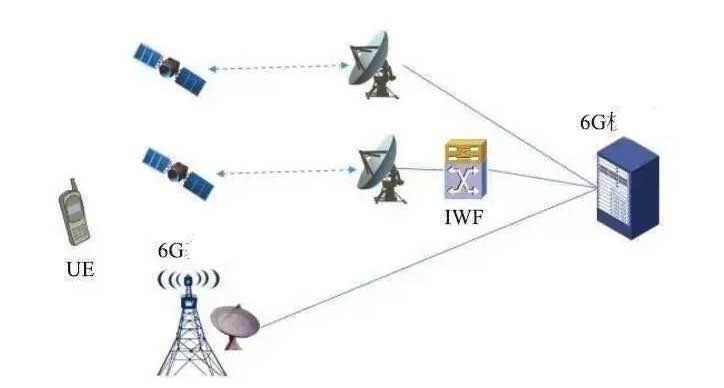
However, some manufacturers expressed concerns about the complexity of integrating NTN with terrestrial networks (TN). Key technical challenges, such as interference coordination and mobility management, require further research and exploration in future standardization efforts.
Standardization Principles and Challenges
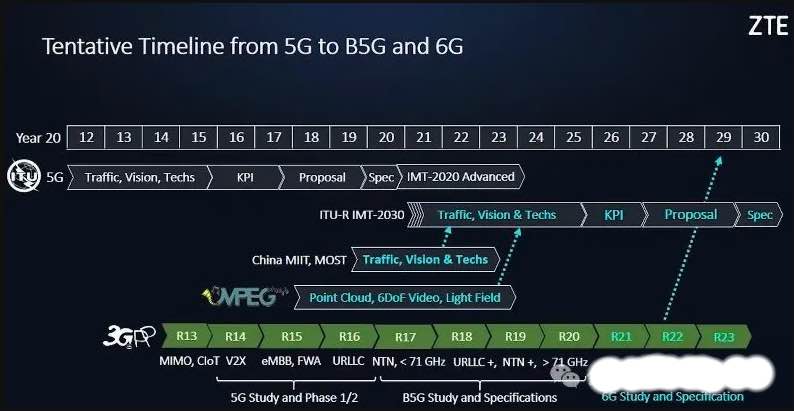
The meeting adopted document No. 6GWS-250243 to summarize discussions and establish three guiding principles for 6G standardization:
Technical Simplicity:
Avoid redundant functional options and promote lightweight, streamlined standards.Demand-Driven Approach:
Prioritize real-world use cases and commercial value, with a focus on supporting high-impact, high-yield scenarios.Ecosystem Collaboration:
Strengthen cross-industry cooperation to address the diverse needs of vertical sectors, such as the Internet of Vehicles and the Industrial Internet.
Here’s a grammatically refined version with minimal changes to your original wording:
The controversy focuses on the pace of standardization. For example, Apple, Vodafone, and others have called for “voice service support from Day 1,” but some manufacturers believe that premature definition may limit flexibility. Ericsson and Nokia emphasize that decisions should be made after sufficient research to avoid repeating the delay problem of 5G standardization.
Future Outlook
Although the meeting did not reach a specific technical resolution, it set a clear framework for 3GPP’s subsequent work.
The RAN working group will focus on high-frequency band communications and AI-enabled air interface design. The SA/CT working group needs to explore the core network’s AI-native capabilities, cloud-edge collaborative architecture, and security enhancement mechanisms.
Operators generally expect the 6G standard to mature around 2030, supporting the next-generation social infrastructure of the “Internet of Everything.”
Leave a Reply