On October 19, the National Security Agency (NSA) issued a report claiming that it had obtained evidence that the U.S. National Security Agency had launched a cyberattack against China’s National Time Service Center (NTSC). This raised public awareness about the often-overlooked world of timekeeping systems — the invisible infrastructure that keeps nations, industries, and technologies in sync. This article will address the importance of timekeeping systems vis-à-vis the following:
- What exactly is “time service”?
- And why is the National Time Service Center so important?
What Is “Time Service”?: The importance of timekeeping systems
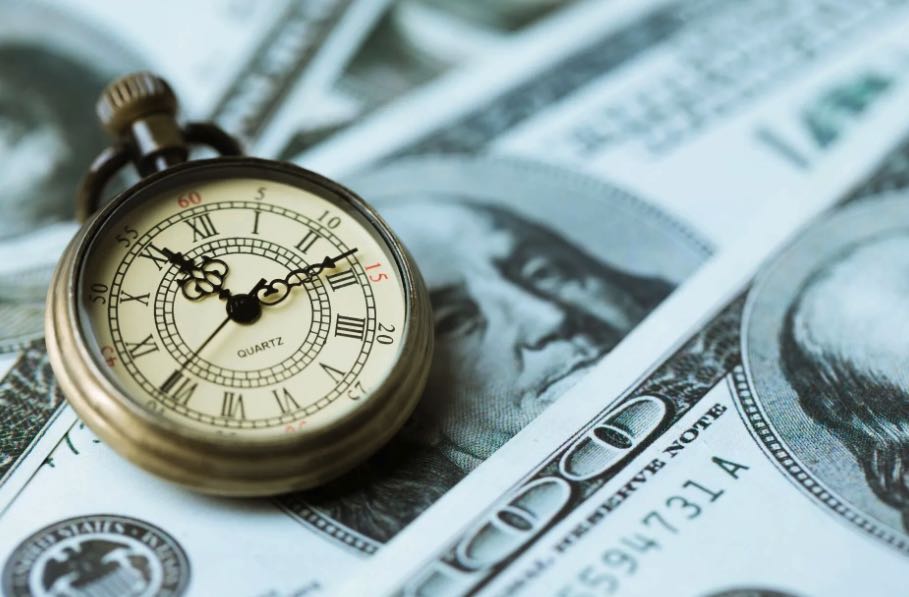
Time is one of humanity’s most valuable resources. The concept of tracking time dates back thousands of years. In ancient societies, people divided the day into 12 hours. At night, watchmen would strike wooden clappers and call out, “Be alert, watch for fires!” to mark the passing of each hour.
Early “civil servants” used instruments like gnomons (sundials) to determine time, sharing it by ringing bells or beating drums. Around the emperor were astrologers who studied celestial patterns, designed calendars, and guided agricultural activities such as planting, fertilizing, and harvesting.
Historically, this process of setting time standards and distributing them to the public was known as “respectfully recording the time of heaven and passing it on to the people.”
In the modern world, this function continues. Time services provide accurate, standardized time signals for governments, industries, and citizens.
The Evolution of Timekeeping Systems
From the 17th to 19th centuries, advances in mechanical engineering led to the invention of precise timekeeping instruments—clocks. The rapid spread of clocks and watches transformed how people organized daily life, driving economic and social progress.
In the 20th century, the electronics industry revolutionized timekeeping again with battery-powered, electric, and quartz clocks. These innovations combined microelectronics and precision mechanics, cutting daily errors to less than 0.5 seconds.
At this point, the idea of a “time system”, a consistent framework for measuring time, became essential.
The Three Common Time Systems
Universal Time (UT): Based on Earth’s rotation period.
Ephemeris Time (ET): Based on Earth’s orbit around the Sun.
Atomic Time (AT): Based on electromagnetic oscillations of atoms (for example, cesium atoms).
While Universal Time varies and Ephemeris Time is less precise, Atomic Time provides a consistent and highly accurate measurement.
In 1967, during the 13th General Conference on Weights and Measures, countries voted to adopt Atomic Time as the new standard for measuring time. This led to the creation of the second as an official SI (International System of Units) time unit, which is one of the three fundamental physical quantities.
Today, the internationally accepted standard is Coordinated Universal Time (UTC). This is a system that combines atomic precision with astronomical consistency. UTC serves as the world’s official time reference.
Global Time Zones and Standards
The Earth is divided into 24 time zones according to longitude. While China geographically spans five time zones, the entire nation operates on Beijing Time (UTC+8) to maintain consistency and coordination.
Must Read: Exploring the Communication Technologies Behind 110/911/999/122 Visual Alarm Systems
Specific Methods of Timekeeping
As technology advances, the way humans measure and share time continues to evolve. Modern timekeeping has grown far beyond sundials and clocks. Today, nations operate advanced time services that maintain, transmit, and synchronize accurate time standards for industries, defense, research, and everyday life.
Below are the main methods of timekeeping used around the world.
1. Shortwave Timing
Shortwave radio uses electromagnetic waves with frequencies between 3 MHz and 30 MHz to transmit time signals.
These signals can travel hundreds or even thousands of kilometers, covering large regions.
For example, shortwave time stations continuously broadcast standard time information, which can be received by special radios or devices. The timing accuracy of this method is within a few milliseconds, which is suitable for scientific and industrial use.
2. Long Wave Timing
Long wave radio operates at lower frequencies, between 30 kHz and 300 kHz, allowing its signals to travel much farther.
Long wave timing provides microsecond-level accuracy and is widely used for navigation, telecommunications, and national infrastructure.
It serves as one of the most stable ground-based timing methods, ensuring reliable time synchronization even in areas without internet access.
3. Low Frequency Time Code Timing
Low-frequency time code timing is a specialized form of long-wave transmission.
It provides regional standard time through continuous coded signals.

Many radio-controlled clocks and watches use this method to automatically adjust themselves, achieving near-perfect precision, accurate to within one second every 300,000 years.
4. Telephone Timing
Telephone timing uses traditional telephone networks to distribute standard time.
By dialing a dedicated service line or using a specialized receiver, users can obtain real-time synchronized time signals.
This system delivers timing accuracy within 10 milliseconds, making it a reliable backup when other technologies are unavailable.
5. Television Timing
This method transmits precise time information through television signals. For example, broadcast networks embed atomic clock data into TV transmissions.
When user devices receive these signals, they automatically adjust their internal clocks, maintaining accuracy of about 10 microseconds.
This invisible feature ensures that certain broadcast-dependent systems remain synchronized without public awareness.
6. Network Timing
Network timing uses the Network Time Protocol (NTP), a system familiar to most computer networks.
By connecting to an NTP server, computers and devices can synchronize their internal clocks with official time servers automatically.
This method powers the accuracy of global communications, financial transactions, and the internet itself.
7. Satellite Timing
Satellite timing represents the most advanced and accurate method of all.
It forms the backbone of the Global Navigation Satellite System (GNSS). This includes the United States’ GPS, China’s BeiDou, and Europe’s Galileo.
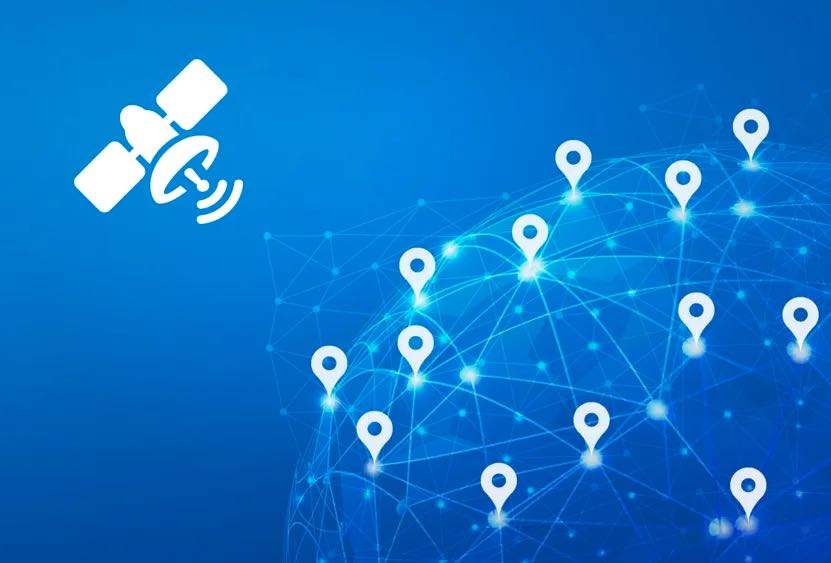
Each GNSS satellite carries an atomic clock, ensuring that every signal it sends includes exact time data. Devices on Earth can decode this information using a GNSS receiver, allowing synchronization with atomic-level precision.
The GNSS system supports three key functions known as PVT: Position, Velocity, and Time.
This means it not only provides location and speed data but also delivers the exact global time that powers navigation, telecommunications, and even cybersecurity systems.
For instance, China’s BeiDou Satellite Navigation System maintains an atomic time standard called BDT, which is linked to Coordinated Universal Time (UTC). The time difference between them is controlled within 100 nanoseconds, showcasing the extraordinary precision of satellite-based timekeeping.
The Importance of Timing Services
The accuracy of GNSS timing also brings a major advantage: global coverage.
Unlike shortwave or long wave signals, which can be affected by terrain and distance, satellite timing works almost anywhere—including oceans, airspace, and remote regions.

But why do we need time to be so precise?
It is not about shopping or convenience. It is about keeping modern life running safely and efficiently. Let’s explore some critical sectors that rely on precise timekeeping.
Aerospace
Aircraft and spacecraft travel at extreme speeds. Without accurate time synchronization, even a one-second difference could translate into massive positional errors. In missions like space docking, both vehicles must be synchronized to within microseconds to ensure accuracy and safety.
Power Industry
Electric grids operate on alternating current, where timing determines how peaks and troughs align. If devices in the grid fall out of sync, it can lead to inefficient power flow, system instability, and even large-scale blackouts.
Finance
Every digital transaction depends on precise timestamps. In global financial markets, even a millisecond delay can affect trades or lead to failed transactions.
Poor synchronization can also create vulnerabilities that hackers might exploit, posing significant security risks.
Communications
Mobile networks, especially 5G, rely on time division duplexing (TDD), which requires synchronization within ±1.5 microseconds.
If systems fall out of sync, it can interrupt calls, slow data transfer, and disrupt essential services.
Other Critical Fields
Sectors such as transportation control, geographic mapping, earthquake monitoring, meteorology, and emergency response all depend on accurate time synchronization to function safely and effectively.
Final Words
High-precision timekeeping is not just a technical achievement; it is a strategic national resource.
Accurate time ensures the stability of communication networks, the safety of air and sea travel, the security of financial systems, and the reliability of energy grids.
In short, timekeeping underpins the modern world, quietly ensuring that our technology, infrastructure, and global systems run in perfect harmony.
Leave a Reply