Introduction to Chip and Semiconductor Science
In our daily work and life, we use a wide range of electronic products, such as computers, smartphones, televisions, refrigerators, and washing machines. Understanding chip and semiconductor science helps explain how these modern devices actually function behind the scenes.
If we disassemble these products, we will usually find a green board similar to the one shown below.

As everyone knows, this green board is called a circuit board. Its more official name is a Printed Circuit Board (PCB), sometimes also referred to as a Printed Wiring Board (PWB).
On a PCB, many electronic components are soldered onto the surface, including capacitors, resistors, and inductors.
We can also notice some black square-shaped components mounted on the board.
That’s right. These components are very likely chips.
Read Also: Understanding Chip Packaging Process: From Traditional to Advanced Semiconductor
Definition of a Chip

The term “chip” is actually quite broad.
Inside electronic devices, chips are hidden but extremely important, much like the engine of a car or the heart of a human body. Because they act as the “core” of electronic products, they are called chips.
Generally speaking, a chip is an integrated circuit, and the two terms are often used interchangeably.
Integrated circuits are relatively easy to define. They are miniature circuits formed by integrating electronic components such as transistors, resistors, capacitors, and diodes onto a single substrate using semiconductor manufacturing technologies.
If the substrate is made from semiconductor materials such as silicon, then it belongs to the category of semiconductor integrated circuits.
You can learn more about integrated circuits here: IBM Guide to Integrated Circuits
Traditionally, when people talk about integrated circuits, they are usually referring to semiconductor integrated circuits.
Because of this, the terms semiconductor, chip, and integrated circuit are often used interchangeably in daily conversation.
The Difference Between Chips and Integrated Circuits
If you look more closely, however, there are still subtle differences between chips and integrated circuits.
Some industry opinions suggest that:
• An integrated circuit mainly refers to the circuit itself and emphasizes the implementation of a specific function, such as logic operations. This term is more commonly used in circuit design scenarios.
• A chip is a more product-oriented concept. After design, manufacturing, packaging, and testing, the final usable product becomes a chip.
That is why people often use terms like:
• CPU chip
• AI chip
• Baseband chip
Some experts also define a chip as:
“A general-purpose semiconductor component product containing one or more integrated circuits capable of performing a specific function.”
Or more simply, a chip can be considered a general term for semiconductor component products.
Semiconductors and Integrated Circuits
Compared with chips and integrated circuits, the distinction between semiconductors and integrated circuits is much clearer.
Semiconductors include:
• Integrated circuits
• Discrete devices
• Optoelectronic devices
• Sensors
The biggest difference between integrated circuits and the other three categories lies in their level of integration.
Integrated circuits contain far more transistors than discrete devices, optoelectronic devices, or sensors. In addition, their substrate materials are often different.
Currently, the combined market size of optoelectronic devices, discrete devices, and sensors accounts for only a small portion of the overall semiconductor market.
This is why integrated circuits are considered the most important part of the semiconductor industry today.
According to World Semiconductor Trade Statistics (WSTS), integrated circuits dominate the global semiconductor market.
You can learn more here: World Semiconductor Trade Statistics (WSTS)
Chip Classification
A chip is essentially a circuit designed to perform a specific function.
Its modular design allows manufacturers to quickly design and develop products while reducing development difficulty and shortening production cycles.
For decades, semiconductor technology has advanced rapidly under the influence of Moore’s Law.
As chips became smaller and more densely packed with circuits, electronic products also became smaller, cheaper, and more power-efficient.
This technological progress not only improved our quality of life but also accelerated the information technology revolution and the development of modern civilization.
The invention of smartphones itself would not have been possible without chips.
Today, chips are used almost everywhere and have evolved into many different categories.
According to the classification system used by World Semiconductor Trade Statistics (WSTS), integrated circuits are mainly divided into:
• Analog chips
• Microchips
• Logic chips
• Memory chips
On an unofficial level, chip classifications can vary depending on industry usage.
Common Functional Chip Categories
Based on functionality, chips are often classified into:
• Computing chips
• Memory chips
• Communication chips
• Sensing chips
• Energy-management chips
• Interface chips
The types of chips we are most familiar with include the following:
More Ways Chips Are Classified
Based on their grade and reliability requirements, chips can also be categorized into:
• Consumer-grade chips
• Industrial-grade chips
• Automotive-grade chips
• Military-grade chips
• Aerospace-grade chips
Different grades are designed for different operating environments and reliability standards.
For example, automotive-grade chips must withstand extreme temperatures and vibration, while aerospace-grade chips require extremely high reliability for use in satellites and spacecraft.
Classification by Design Philosophy
Based on design philosophy, chips can also be divided into:
• General-purpose chips
• Application-Specific Integrated Circuits (ASICs)
General-purpose chips include processors such as CPUs and GPUs, which can handle a wide variety of computing tasks.
ASICs, on the other hand, are designed specifically for dedicated functions or applications.
For example, cryptocurrency mining machines and certain AI accelerators often rely on ASIC chips for maximum efficiency.
Classification by Manufacturing Process and Materials
Chips can also be categorized by manufacturing process technology.
These are the process nodes we often hear about, such as:
• 28nm
• 14nm
• 7nm
• 5nm
These numbers refer to semiconductor manufacturing processes and transistor density improvements.
You can learn more about semiconductor manufacturing technology here: TSMC Semiconductor Manufacturing Technology
Classification by Semiconductor Materials
Chips can also be classified according to semiconductor materials, including:
• Silicon (Si)
• Germanium (Ge)
• Gallium Arsenide (GaAs)
• Gallium Nitride (GaN)
Different semiconductor materials have different electrical properties and are suitable for different applications.
For example, gallium nitride is becoming increasingly important in high-power charging devices and RF communication systems.
We will introduce these materials in more detail later when discussing semiconductor manufacturing processes.
Optical Chips and Emerging Technologies
In fact, modern chip technology is no longer limited to electrical chips alone.
Today, researchers and manufacturers are also developing optical chips, such as silicon photonics technology, which uses light instead of electric current to transmit signals.
This technology is considered extremely promising for high-speed communications and data-center applications.
You can learn more about silicon photonics here: Intel Silicon Photonics Technology
Integrated Circuit Classification
From the perspective of integrated circuits, there are many additional ways to classify chips.
Classification by Manufacturing Method
Based on manufacturing methods, integrated circuits can be divided into:
• Semiconductor integrated circuits
• Film integrated circuits
Film integrated circuits use materials such as metals and ceramics.
They can be further divided into:
• Thick-film integrated circuits
• Thin-film integrated circuits
Classification by Circuit Properties
Based on circuit properties, integrated circuits are commonly divided into:
• Digital integrated circuits
• Analog integrated circuits
• Mixed-signal integrated circuits
Digital Integrated Circuits
Digital integrated circuits process digital signals.
These are the types of chips most people encounter daily, including:
• CPUs
• GPUs
• Digital Signal Processors (DSPs)
• Microcontrollers (MCUs)
Analog Integrated Circuits
Analog integrated circuits are widely used in:
• Sensors
• Power-management chips
• Operational amplifiers
They mainly perform functions such as:
• Signal amplification
• Filtering
• Demodulation
• Signal mixing
Mixed-Signal Integrated Circuits
Mixed-signal integrated circuits combine analog and digital circuits onto a single chip.
As you might expect, Analog-to-Digital Converters (ADCs) and Digital-to-Analog Converters (DACs) belong to this category.
Classification by Integration Scale
Integrated circuits can also be categorized according to the number of microelectronic devices integrated onto a chip.
The higher the integration scale, the more complex and capable the chip becomes.
Classification by Conductivity Type
To be even more specific, integrated circuits can also be divided according to conductivity type:
• Bipolar integrated circuits
• Unipolar integrated circuits
Bipolar Integrated Circuits
Bipolar integrated circuits have:
• More complex manufacturing processes
• Higher power consumption
Representative bipolar integrated circuit families include:
• TTL
• ECL
• HTL
• LST-TL
• STTL
Unipolar Integrated Circuits
Unipolar integrated circuits have:
• Simpler manufacturing processes
• Lower power consumption
• Better scalability for large-scale integration
Representative unipolar technologies include:
• CMOS
• NMOS
• PMOS
These terms will be explained in greater detail later when discussing how chips actually work.
Internal Structure of a Chip
As mentioned earlier, most chips appear as black square-shaped components.
Sometimes they also include a silver metal cover for additional protection and improved heat dissipation.
For example, this is commonly seen in CPUs.
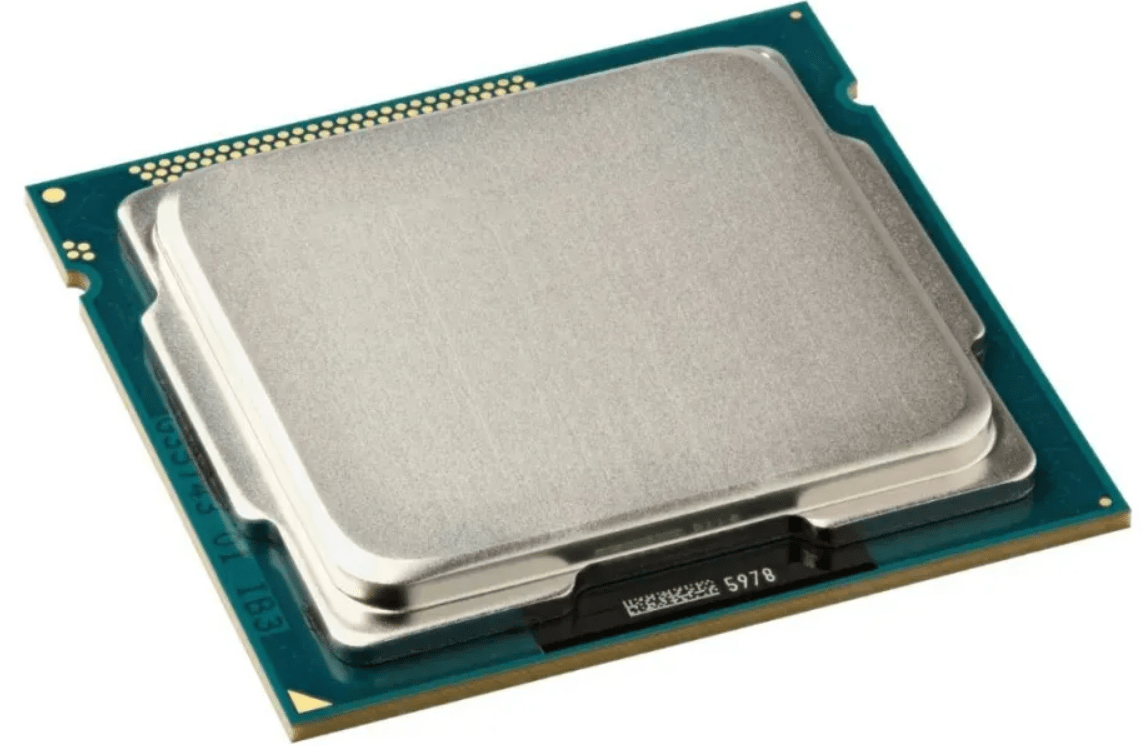
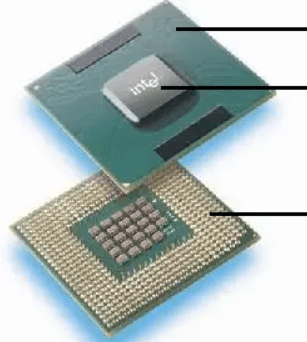
After packaging, the chip looks like a finished product ready for installation.
Packaging itself is an important step in semiconductor manufacturing.
Only after removing the outer shell can we truly see the actual core structure inside the chip.
Under a microscope, the chip looks something like this:
The outer ring consists of pins or contacts.
The thin lines are leads used to connect different parts of the chip.
The square-shaped area in the middle contains the actual circuitry of the chip.
If we zoom in even further, it begins to reveal the incredibly dense and complex microscopic structures that make modern semiconductors possible:


Leave a Reply