Since the launch of the iPhone 15, the under-screen camera has become the focus of attention in many news media outlets. In this post, we will analyze the challenges of iPhone under-screen camera development.
Some time ago, Macrumor revealed that Apple’s suppliers in South Korea had begun researching and developing under-screen smartphone cameras, and netizens immediately pointed out that similar rumors had already been circulating five years ago.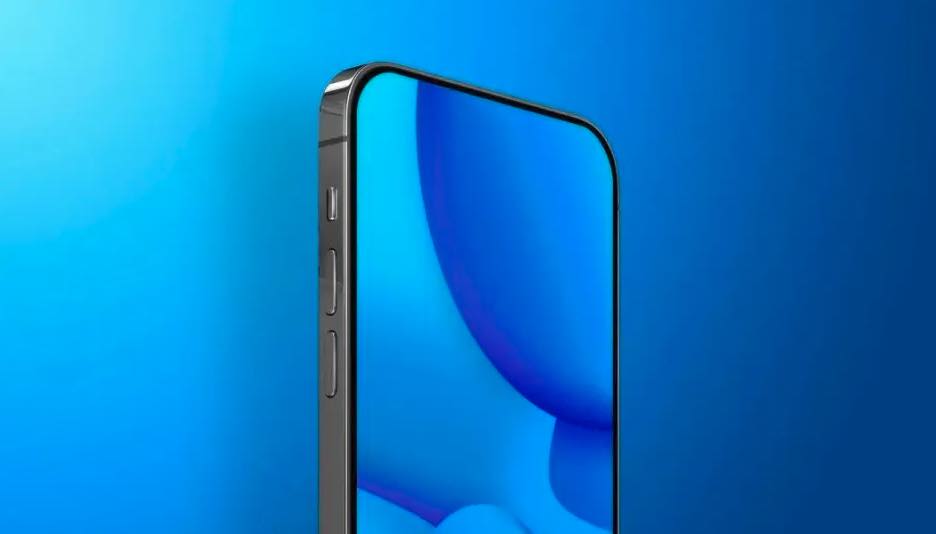
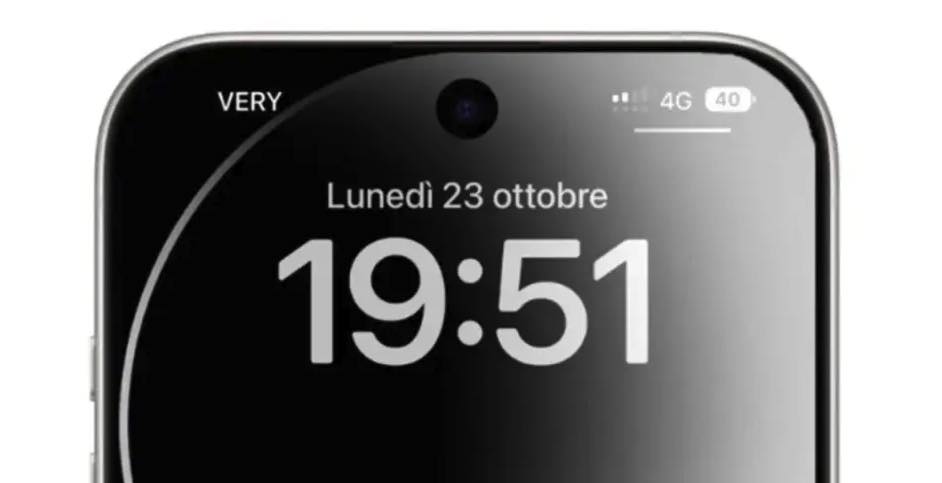
We don’t know when to see the iPhone pictured here, but the debate will continue.
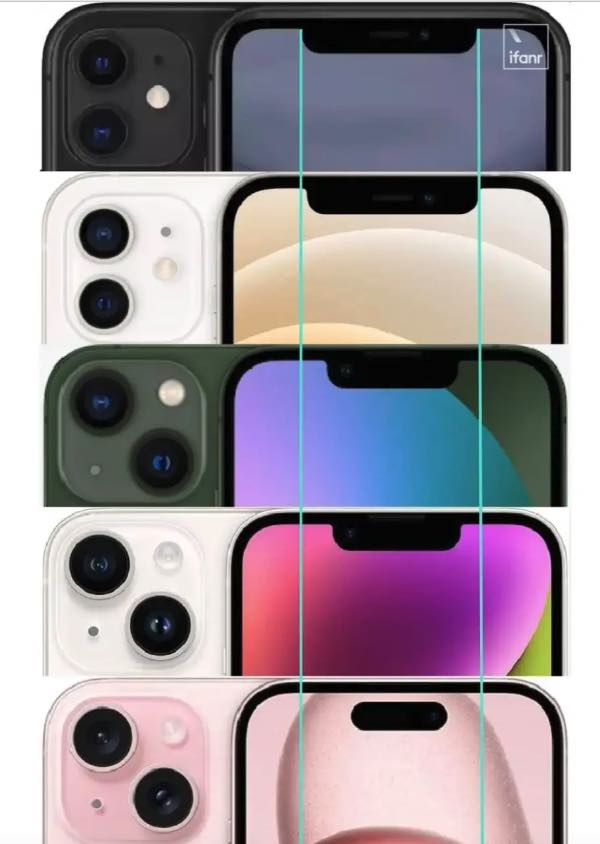
Compared to Android’s increasingly smaller front-facing cameras, and even its attempts at “true full screen,” Apple is more like a spectator sitting on the sidelines, in the same space and time, but not participating in the game, standing aside and sticking to the black spot above the screen.
To understand why Apple has been slow to launch the much-anticipated under-screen camera, we must first clarify one issue:
Why is The Front Module/Notch so important to Apple?
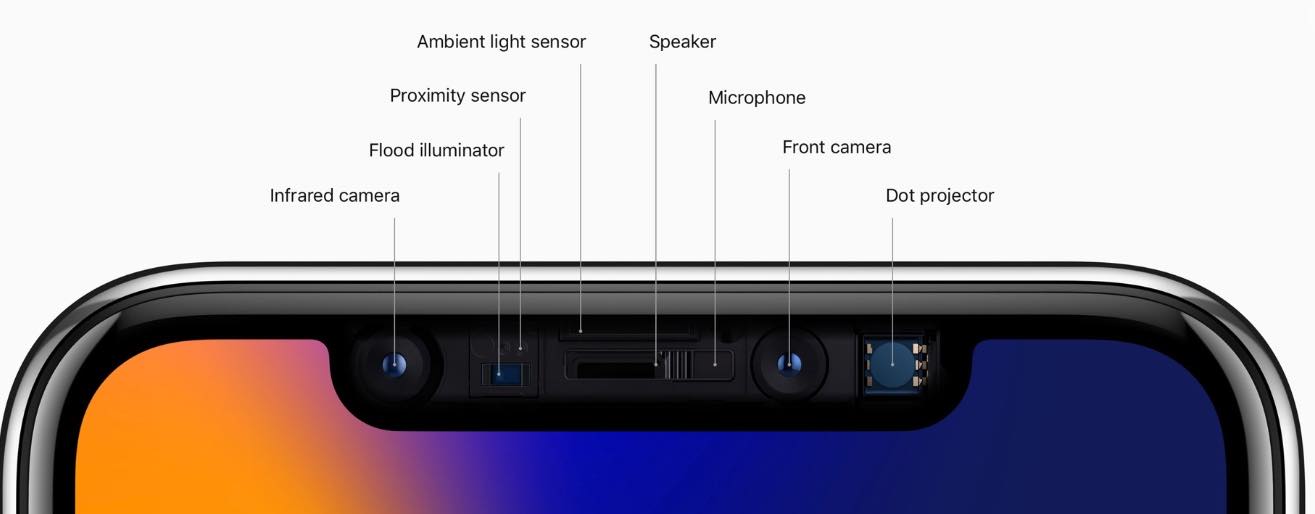
The more furniture, the bigger the house. Do you know that a secret is hidden in Apple’s camera notch?
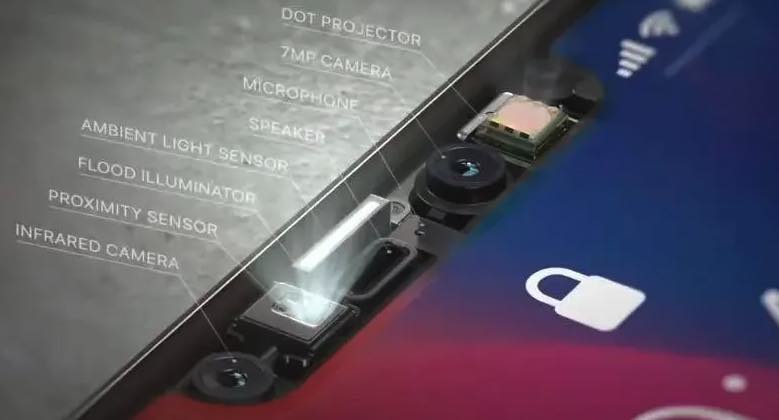
The front module includes 8 sensing components, including an “infrared lens,” a “floodlight sensor element,” a “speaker,” and others. Looking at it from this angle again, we can understand the existence of the bangs.
The infrared lens, dot projector, and front camera are the fundamental reasons Apple insists on retaining the large module.
Although the iPhone 15 series uses a shorter “Dynamic Island” and many sensors have been rearranged, the three brothers still stand in the center of the “island.”
iPhone has always had its unique understanding of photography. The review website DXOMARK ranked the iPhone 15 Pro Max’s “selfie effect” score at the top of the list in the past two years. Even last year’s 14 achieved an excellent second place among the new phones in 2023.

The iPhone’s paper data has never been the best, but Apple’s shadow is always present in all horizontal comparisons of photography reviews; its photo style is not the most pleasing, but its natural imaging effect is quite a highlight on major lists.
In this era of increasingly frequent online interactions, selfie live broadcasts, video calls, and online meetings all require the participation of the front camera, so the iPhone has placed great importance on front-facing photography.
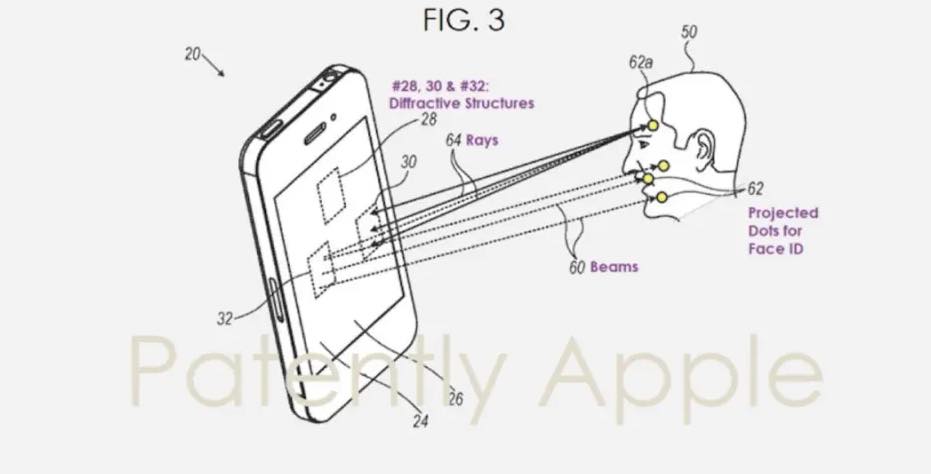
The twin brothers, the “infrared lens” and the FaceID “dot projector,” have merged into the gatekeeper of Apple’s ecosystem: Face ID.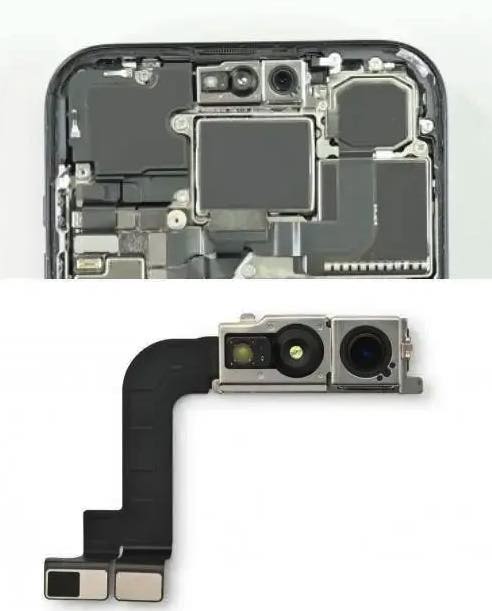
Apple users often complain about the iPhone’s battery life and signal quality, but we rarely hear rumors about Apple’s poor security. This is thanks to Apple’s deep involvement in security verification.
As early as 2017, Face ID joined the Apple ecosystem. At the same time, the iPhone completely abandoned Touch ID, which it had pioneered.
The security of face recognition is incomparable to fingerprint unlocking. The unlocking process of a “3D structured light dual camera” is a bit awkward to explain in detail, so we will only briefly explain the key points.
“Payment-level” facial unlocking is the biggest compliment to Face ID. Even the vault can confidently rely on the technology. Of course, there are some insurmountable thresholds, and the “dot projector” is one of the main contributors.
The invisible IR Dot is projected onto the human face through the lens, forming a three-dimensional model with 30,000 dot groups on the face. The virtual mask is scanned with an infrared lens and matched with the dot matrix information in the mobile phone to confirm whether the person unlocking the phone is the owner.
How Does The Security of The Face ID Compare with Fingerprint Unlocking?
The security of facial information is actually 20 times higher than that of fingerprint solutions. The probability of unlocking a phone with the same fingerprint is one in 50,000, while in Face ID, this probability is reduced to one in a million.
After years of upgrades to facial recognition, users can use it while wearing masks, glasses, and hats, but it cannot be unlocked using photos of fake faces or even 1:1 face models.
To prevent others from forcibly unlocking the phone while the owner is sleeping, Face ID has also added “attention detection” technology. Only when the owner’s attention is on the phone screen will the iPhone identify it as an unlocking command, and the above unlocking process can be carried out.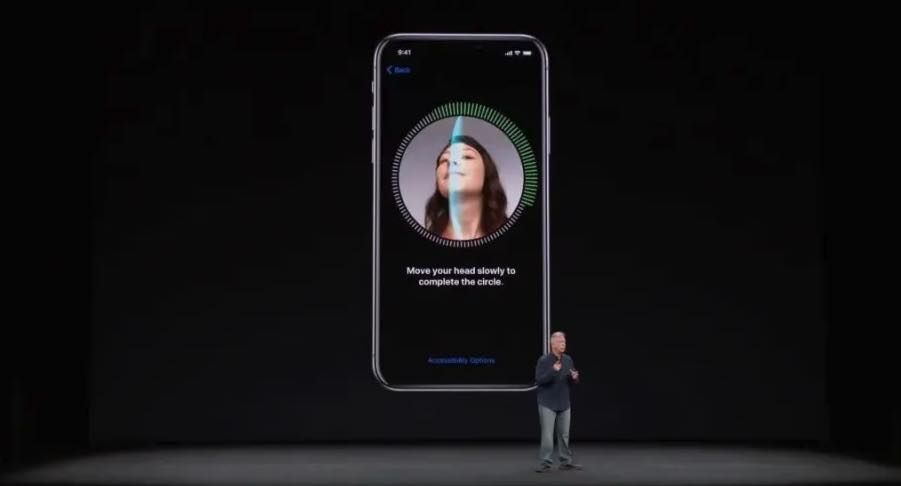
When Will Apple Launch Its First Under-Screen Camera Phone?
Three ways to plug the gap
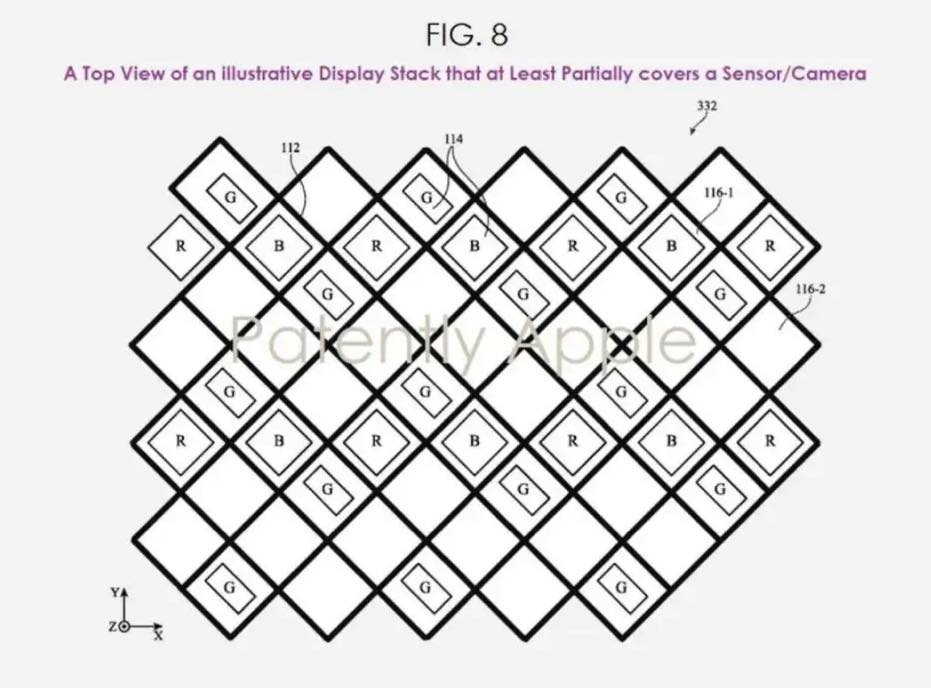
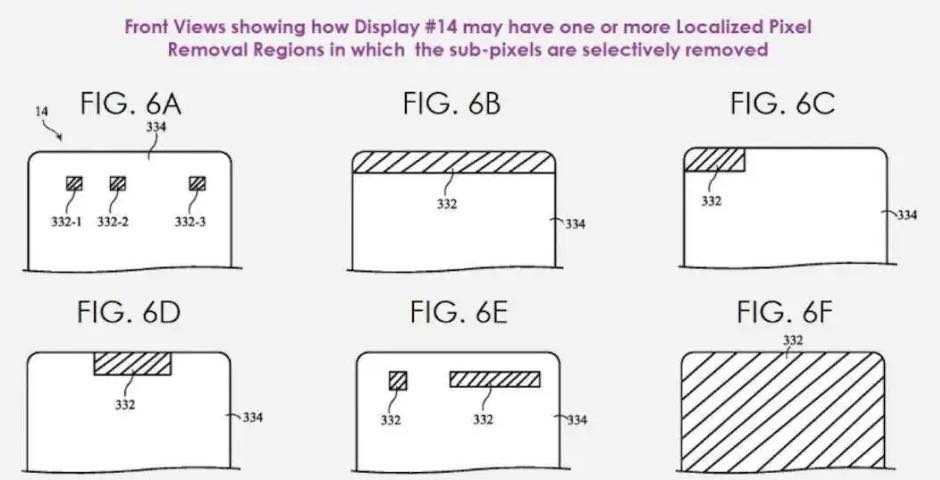
Since OLED luminous materials are not transparent, to allow both the screen and the lens to see us under the screen, it is necessary to increase the screen’s light transmittance in the area of the front lens, whether by making the gaps between pixels larger or removing some pixels. The ultimate effect is that light can pass through the gaps smoothly and enter the lens.
Two Main Challenges of iPhone Under-screen Camera Development
iPhones with FaceID have larger front modules that need to be hidden Larger modules require larger light transmission areas.
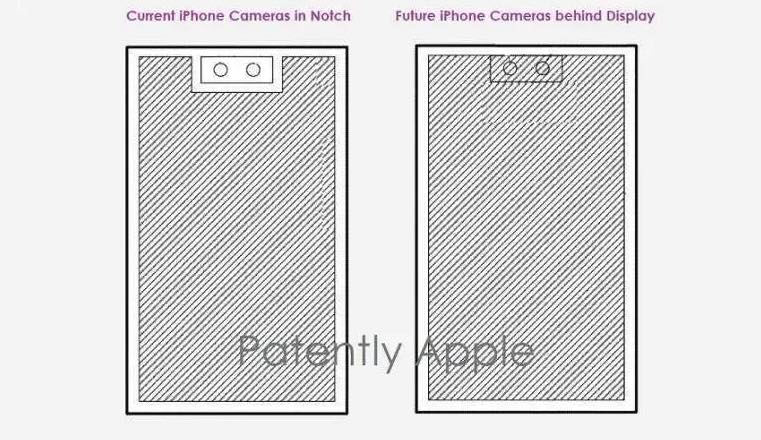
The Red Magic 9 Pro is the market device with the best control over the resolution difference between the “under-screen area” and the “main screen area.” After experiencing it for some time, we can’t feel the abruptness of the lack of resolution in most scenarios, but this effect can only be achieved with only one camera.

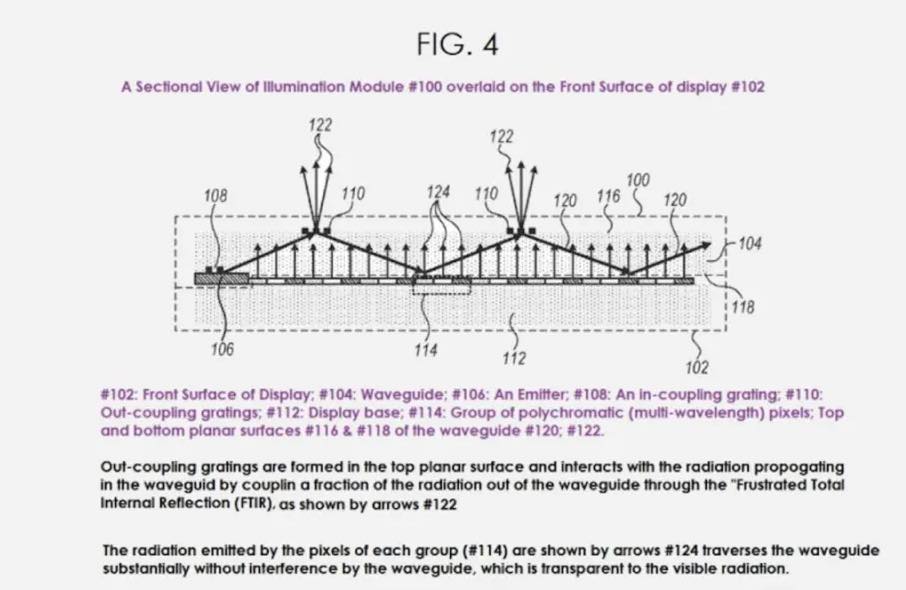
In response, Apple used the “integration + hiding” method in its patent to minimize the impact on screen resolution.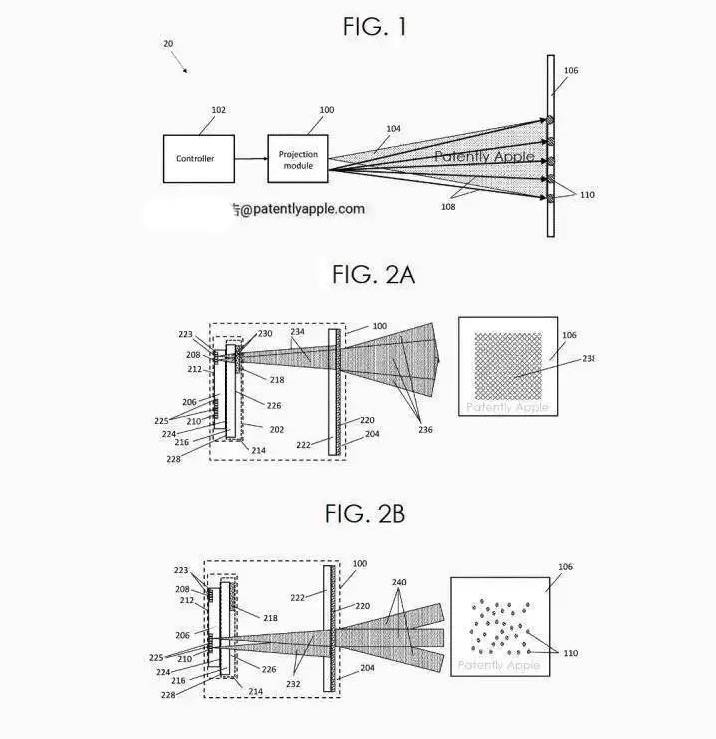
How Does FaceID Impact Apple’s Under-Screen Camera Development

Impact of Under-Screen Cameras on Mobile Phone Status Bars
Leave a Reply