Automakers are emerging as a significant new force in the humanoid robot industry as AI Boosts the popularity of humanoid robots.
AI Boosts The Popularity of Humanoid Robots
In 2021, Tesla introduced the concept of humanoid robots and unveiled its prototype, Optimus, a year later. By December 2023, Tesla revealed an improved second-generation Optimus. Reports indicate that it leverages visual neural networks and FSD chips to enhance sensory capabilities, enabling it to walk flexibly, squat, stand, grab objects, and perform other movements. Tesla CEO Elon Musk has announced plans to begin “limited production” of Optimus in 2025, with thousands of these humanoid robots expected to operate in Tesla factories.
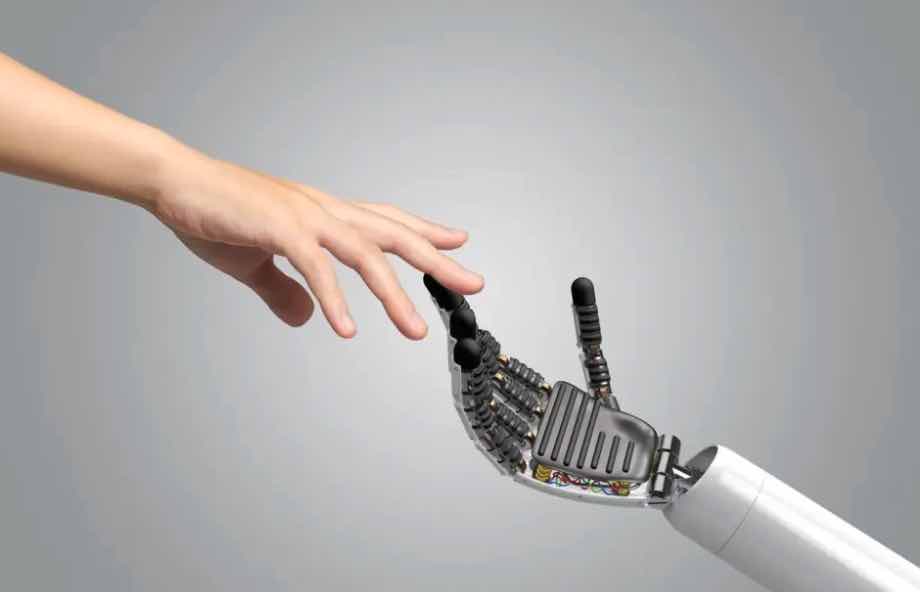
Musk’s Bold Prediction: Humanoid Robots Could Outnumber Humans
At Tesla’s 2024 shareholders meeting in October, Elon Musk boldly predicted that the future could see the ratio of humanoid robots to humans exceed 1:1 and even reach an astonishing 2:1. He estimated that the number of humanoid robots could grow to 10–20 billion, with a potential market value as high as $25 trillion.
China’s Growing Humanoid Robot Market
Using China as a case study, automakers that have leveraged AI technology through smart driving are expanding their applications into new domains. Over the past two years, companies like Xiaopeng Motors, Dongfeng Motors, Chery Automobile, SAIC Group, and BYD have entered the humanoid robot market through independent R&D, technical collaborations, and strategic investments. Many brokerage firms suggest that 2025 could mark the first year of mass production for humanoid robots.
Humanoid Robot Market Forecast and Growth Potential
According to the “Humanoid Robot Industry Research Report” released at the 2024 World Artificial Intelligence Conference, the size of China’s humanoid robot market is expected to reach approximately 2.76 billion yuan by the end of 2024. By 2029, this market is projected to expand to 75 billion yuan, accounting for 32.7% of the global market. By 2035, it is anticipated to grow further to 300 billion yuan.
BYD’s Strategic Move into Humanoid Robot Development
Many car companies are racing to seize the emerging market for humanoid robots. On December 13, BYD posted a recruitment notice for its embodied intelligence research team, offering ten positions, including senior algorithm engineer, senior simulation engineer, and senior robotics engineer. The announcement revealed that the team will focus on the customized development of various robot bodies and systems to accelerate the implementation of embodied intelligence in the industry. The team has already developed products such as process robots, intelligent collaborative robots, intelligent mobile robots, and humanoid robots.
Embodied Intelligence: AI Meets Physical Entities
Embodied intelligence integrates AI into physical entities, enabling them to perceive, learn, and interact with their environment in a human-like manner. Drones, robotic arms, and smart cars are all examples of embodied intelligence, with humanoid robots being its most socially adaptable form.
Automakers Enter the Humanoid Robot Market
In recent years, major automakers have focused on scenario-based and humanized interactions as key breakthroughs in human-vehicle interaction. Their experience with the mass delivery of intelligent models has laid the foundation for developing humanoid robots. According to incomplete statistics, over a dozen automakers worldwide have entered the humanoid robot market.
Strategic Investments and Developments in Humanoid Robotics
A Digital Thinking Intelligent Technology Company researcher told Times Weekly that car companies have clear advantages in entering the humanoid robot market due to their technical manufacturing capabilities, brand influence, and financial strength. Dongfeng Motor unveiled its automotive embodied intelligence architecture and accelerated related technology research earlier this year. At the Beijing Auto Show in April, Chery Automobile introduced Mornine, a humanoid robot developed in collaboration with AI company Aimoga. Mornine has an integrated large-scale language model that enables language understanding and generation, allowing it to answer professional questions in the automotive field.
Leveraging Automotive Expertise for Humanoid Robot Innovation
Many car companies are investing heavily in emerging hotspots. As early as August 2023, BYD invested in Zhiyuan Robotics, a technology unicorn established just six months prior. By April this year, SAIC Venture Capital, a subsidiary of SAIC Group, participated in Zhiyuan Robotics’ A3 round of strategic financing. In July, BAIC Industrial Investment also invested in Zhiyuan Robotics.
Since announcing its transformation from a traditional automaker to an AI-driven car company last year, Xpeng Motors has increased its focus on AI. In November, Xpeng Motors released a real-life demonstration video of its new AI robot, XPENG Iron. XPENG Iron has a 1:1 human-like ratio and is powered by Xpeng’s Turing chip, providing natural walking, perception, and interaction capabilities. Its performance surpasses the company’s first humanoid robot, PX5, released last year.
The Benefits of Car Companies Entering the Humanoid Robot Space
Many car companies have gained significant experience in autonomous driving, visual algorithms, chip design, and motor control. This expertise can be transferred to humanoid robot development. The overlap in supply chains for car and robot manufacturing can help reduce R&D costs, shorten time-to-market for new products, and accelerate their release. Additionally, car companies’ broad market reach and strong brand images allow them to attract consumer and investor attention quickly. Finally, their substantial financial resources support long-term R&D investment and technology evolution.
Expanding Applications of Humanoid Robots
Tesla, the “catfish,” has entered the humanoid robot market, signaling the beginning of a mass production wave in the industry. The arrival of humanoid robots has transformed science fiction into reality, sparking limitless imagination. Automakers are also expanding the application scenarios for humanoid robots, accelerating their large-scale implementation.
Currently, some automakers are leading the way by incorporating humanoid robots into production and manufacturing processes.
Advancements in Tesla’s Optimus and UBTECH’s Walker S1
In May of this year, Tesla showcased the latest advancements in its humanoid robot, Optimus. Related videos revealed that Optimus sorts battery cells at Tesla’s factory using neural networks to control its upper body and legs for balance. In November, the humanoid robot Walker S1, developed by UBTECH, was deployed at BYD’s Changsha Factory. It works alongside unmanned vehicles and industrial mobile robots, creating an integrated, fully automated process for sorting, handling, and delivery, completing the final 10 meters of logistics.
Humanoid Robots in Automotive Manufacturing
Humanoid robots are also believed to have broader applications beyond conventional production, manufacturing, logistics, and transportation, especially in automotive manufacturing.
Bai Wenxi, vice chairman of the China Enterprise Capital Alliance, noted that humanoid robots can mimic human movements to perform tasks difficult for industrial robots, such as affixing car logos and installing interior parts. These robots can handle various tasks on automobile production lines, including assembly, testing, and logistics.
Future Potential in Refined Operations and Worker Safety
As technology advances and costs decrease, humanoid robots are expected to play an even greater role in refined operations like assembly workshops. They can also take on dangerous, repetitive, and tedious tasks, working in extreme environments to protect human workers’ safety.
The expansion of application scenarios is paving the way for the mass production of humanoid robots, with many analysts considering 2025 as the “first year of mass production.”
Tesla’s Impact on the Global Robot Market
A research report by Guosen Securities released this month predicts that Tesla’s rapid iteration of its robot products will create a “catfish effect,” stimulating the global robot market and invigorating humanoid robot players. The overlap between vehicle and robot components, along with the involvement of major manufacturers, technological advances, and policy support, is expected to drive the humanoid robot industry forward.
Industry Leaders Paving the Way for Humanoid Robot Innovation
From an industry perspective, in March, NVIDIA launched Project GR00T, a universal basic model for humanoid robots, at the GTC2024 conference, further promoting breakthroughs in robotics and embodied intelligence. Huawei’s Global Embodied Intelligence Industry Innovation Center opened in Shenzhen in November. Leading robot companies, including Figure 1X, Yushu, Zhiyuan, Kepler, and UBTECH, have already begun mass production of humanoid robots.
Leave a Reply